Connect with us

Government

Over $27 Million in Unused Gift Cards Recovered by NYS Comptroller DiNapoli

Published

on

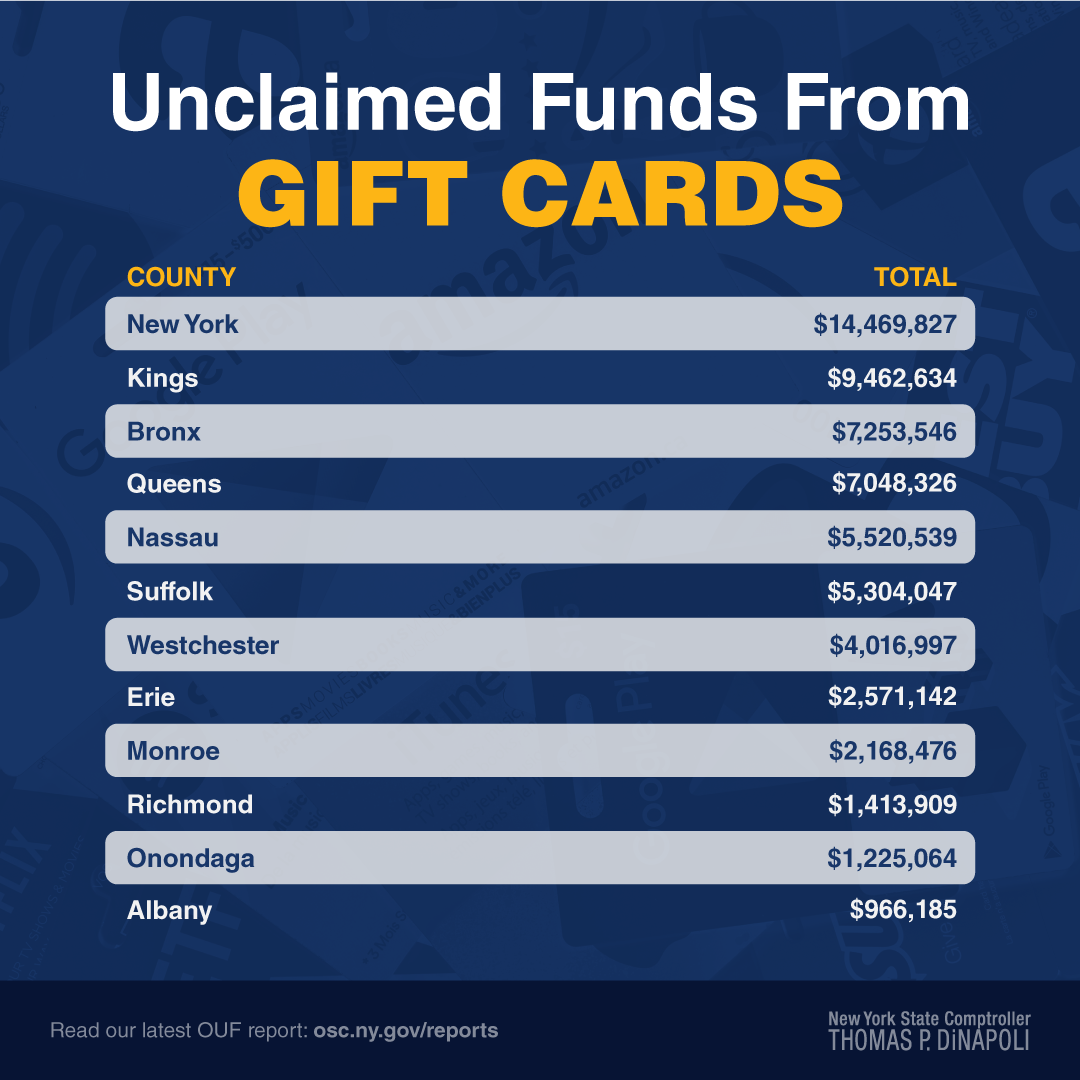
ROCKLAND COUNTY, NY – New York State Comptroller Thomas P. DiNapoli is urging New Yorkers to keep track of the gift cards they received during the holidays. Unused gift card balances can be turned over to the Comptroller’s Office of Unclaimed Funds (OUF) after five years of inactivity. In 2023, the Office recovered over $27 million from gift cards. For this reason, everyone should check for unclaimed funds.

“Many people don’t realize that after 5 years, unused gift card balances are turned over to the Comptroller’s Office of Unclaimed Funds,” DiNapoli said. “Now is a great time to check for unclaimed funds and use those gift cards you received over the holidays to avoid possible inactivity fees or having the money turned over to my office.”

Statewide, New York City residents are owed the most in unclaimed funds stemming from gift cards, totaling nearly $40 million, followed by Long Island residents at $10.8 million and Hudson Valley residents at $7.4 million.

DiNapoli’s office returns an average of $1.5 million in unclaimed funds every day and works with retailers to identify the owners of unused gift cards. Retailers can provide OUF with a name if the person registers the gift card online, if they have been issued a refund, or if the card was purchased with an existing store account. If the owner’s information is not known to a New York retailer, it will report the card details, such as card number and balance, which can be used by the recipient to claim the balance. The Comptroller’s office also sends letters to newly reported owners of unclaimed funds.

DiNapoli reminds gift card recipients to read the fine print on the card for details about any fees and expiration dates, and to consider registering the card with the retailer.

DiNapoli’s office has more than $18.4 billion in unclaimed funds.

Continue Reading
Advertisement

Government

Rockland County Promotes Native Plants and Water-Smart Landscaping

Published

on

The Water Advisory Council is encouraging residents to embrace water-smart landscaping practices that conserve water and support environmental health.

Officials recommend reducing nonfunctional lawn areas and replacing them with native plants, drought-tolerant landscaping, rain gardens, bioswales, and rain barrels. These practices help reduce water consumption, manage stormwater runoff, improve groundwater recharge, and increase resilience to climate change.

According to the Council, water demand in Rockland County rises from an average of 30 million gallons per day to as much as 45 million gallons per day during the warmer months, placing additional strain on local water supplies.

Residents are encouraged to consider native plants such as Creeping Phlox, Foamflower ‘Elizabeth Oliver,’ and Jacob’s Ladder, which require less watering once established and are well-suited to local conditions.

Examples of successful rain gardens featuring native plants can be found at Orangeburg Library, Bowline Point Park, Kennedy Dells County Park, and Piermont Library.

By replacing sections of lawn with native plants and incorporating features that manage rainwater naturally, residents can play a direct role in protecting Rockland County’s water resources.

The initiative is part of the county’s ongoing effort to promote sustainable landscaping and encourage participation in the national “Less Lawn More Life” movement.

Continue Reading

Government

Rockland Conservation & Service Corps Stream Team Helps Prevent Flooding and Protect Waterways

Published

on

Members of the Rockland Conservation & Service Corps are helping protect local communities through their work with the Rockland County Drainage Agency, inspecting and assessing streams throughout Rockland County.

The Corps’ Stream Team identifies obstructions such as fallen trees, debris, and sediment buildup that can restrict water flow and contribute to flooding during heavy storms. Members also document illicit discharges, erosion issues, and areas in need of sediment remediation.

The information collected helps county officials address potential problems before they become larger environmental or public safety concerns.

In addition to reducing flood risks, the Stream Team’s work supports water quality and helps maintain healthy ecosystems throughout the county. By monitoring local waterways and identifying issues early, the team plays an important role in protecting Rockland County’s natural resources and strengthening community resilience.

Officials say the partnership highlights the importance of proactive environmental stewardship and ongoing efforts to keep Rockland County’s streams healthy, safe, and flowing properly.

Continue Reading

Trending