Connect with us

Community

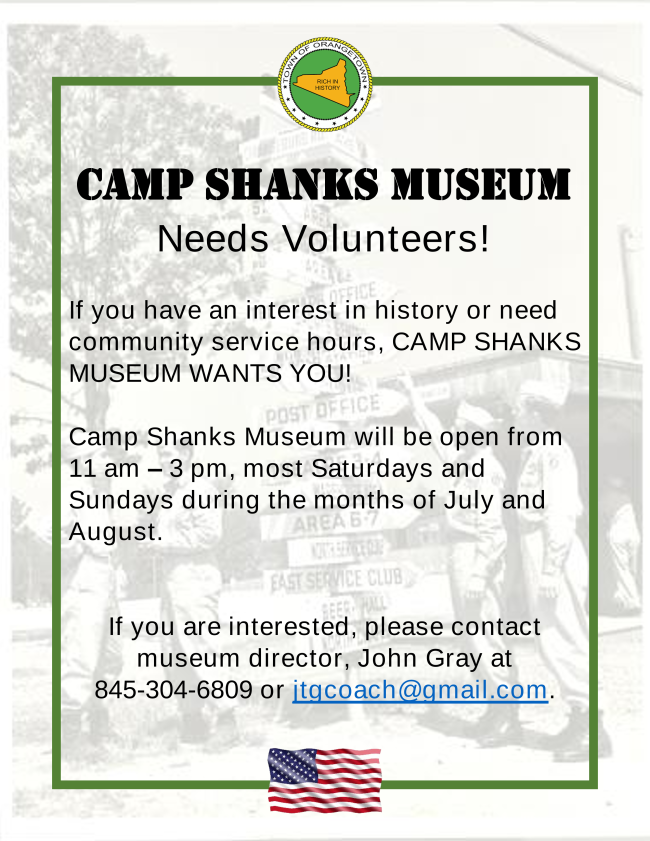
Do You Have An Interest In History And Would Like To Volunteer? Camp Shanks Museum Wants You!

Published

on

The Camp Shanks Museum commemorates the military facility that served as the largest point of embarkation for soldiers headed for the front lines in North Africa and Europe during World War II, including the landing forces for the D-Day invasion. Opened in 1942, Camp Shanks contained 1,500 barracks, mess halls, theaters, a hospital, and other buildings where some 1.5 million G.I.s (approximately 40,000 a month) were issued combat equipment and underwent final inspections before shipping overseas. Most soldiers spent eight to 12 days at the self-supporting complex dubbed “Last Stop, U.S.A.” Located in a simulated barracks, the museum contains artifacts and photographs that recount the history of Camp Shanks and describe the everyday life of male and female soldiers at the facility. A Wall of Honor lists servicemen and women who spent time there. 

Continue Reading
Advertisement

Community

Dunderberg Spiral Railway: The Abandoned Railroad Hidden in Rockland County

Published

on

By 1890, Rockland County was on the verge of becoming home to what would have been the world’s largest gravity-powered amusement railway.

Had it been completed, visitors would have boarded steam-powered incline cars at the foot of Dunderberg Mountain near Jones Point. After climbing nearly 900 feet to the summit, they would have transferred to open-air railway cars and coasted nearly nine miles downhill, twisting through spirals, switchbacks, tunnels, and spectacular Hudson River vistas—all without an engine.

Instead, the project ran out of money after only about a year of construction, leaving behind one of New York’s most fascinating abandoned engineering projects.

A Vision Ahead of Its Time

The railway was conceived by Henry J. Mumford, who had found success operating the famous Switchback Railway in Mauch Chunk, Pennsylvania (now Jim Thorpe).

His idea was simple: build an even larger scenic attraction within easy reach of New York City.

Visitors would arrive by Hudson River steamboat at a grand station at Caldwell’s Landing, just south of Jones Point. Plans called for:

  • A massive hotel
  • Restaurants
  • Picnic grounds
  • Observation towers
  • A park at the summit
  • A state-of-the-art gravity railway unlike anything in America

Tickets were expected to cost 50 cents, and developers predicted as many as 300,000 visitors each season.

Construction Begins

Work started in the spring of 1890.

Hundreds of laborers blasted through solid rock using hand drills and black powder, carving railroad grades into the rugged mountainside.

Within months they had completed:

  • Much of the railway bed
  • Two massive incline grades
  • Large stone retaining walls
  • Deep rock cuts
  • A partially completed tunnel
  • An impressive stone arch bridge
  • Miles of construction roads

Considering every shovel of dirt and every stone was moved without modern machinery, historians consider the amount of work completed remarkable.

Then… Everything Stopped

Before a single passenger ever rode the railway, financing collapsed.

Construction halted in late 1890 or early 1891, likely after investors exhausted available capital. Workers abandoned the project almost overnight.

The rails were never installed.

The grand hotels were never built.

The first train never ran.

What’s Left Today?

More than 135 years later, hikers can still discover remarkable remnants hidden within what is now Bear Mountain State Park.

Among them are:

The Tunnel

Perhaps the most famous remnant is a partially completed tunnel, roughly 100 feet long, blasted directly through solid rock.

Although unfinished, its stonework remains remarkably intact and has become a favorite destination for adventurous hikers.

The Spiral Grades

Large sections of the railroad bed remain clearly visible.

The grades wind around Dunderberg Mountain in sweeping curves that would have carried coaster cars through two giant spirals and three dramatic switchbacks overlooking the Hudson Highlands.

Rock Cuts

In several places, workers blasted directly through cliffs, leaving impressive rock walls that still line the abandoned right-of-way.

Some unfinished drill holes where workers planned their next blasts remain visible today.

Stone Bridge

A beautifully constructed stone arch bridge still stands in the woods, another reminder of the craftsmanship invested in a railroad that never carried passengers.

Hiking the Railway Today

Modern hikers can follow portions of the abandoned railway using:

  • Ramapo–Dunderberg Trail
  • Timp–Torne Trail
  • Jones Trail

Many sections of today’s hiking trails actually follow the original railroad grade, making for surprisingly gentle walking despite the mountain terrain.

Why It’s Still Fascinating

Unlike many abandoned railroads that were dismantled after years of service, the Dunderberg Spiral Railway never operated for even a single day.

It remains a time capsule—a nearly complete Victorian engineering project frozen in the woods.

For hikers, photographers, railroad enthusiasts, and local history buffs, it offers one of the most unique adventures in Rockland County.

Walking the trails today, it’s easy to imagine what visitors might have experienced more than a century ago: breathtaking Hudson River views, thrilling downhill rides, and one of the most ambitious tourist attractions ever proposed in the Hudson Highlands.

Photo courtesy: Rich Zecchini

Continue Reading

Community

Take the Haverstraw–Ossining Ferry to This Hidden Greenway

Published

on

Looking for a relaxing weekend adventure without the hassle of traffic? The Haverstraw–Ossining Weekend Ferry offers the perfect opportunity to explore both sides of the Hudson River.

The 15-minute ferry ride connects Haverstraw and Ossining, making it easy to enjoy waterfront dining, scenic walking trails, and local shops—all without ever getting behind the wheel.

Start with Lunch on the Waterfront

After arriving in Ossining, grab lunch at one of the restaurants just steps from the ferry terminal. Popular waterfront options include 3 Westerly and The Boathouse, both offering beautiful Hudson River views.

Discover the Sing Sing Kill Greenway

After lunch, take a leisurely walk to one of Westchester County’s hidden gems—the Sing Sing Kill Greenway.

Getting there is easy:

  • Walk up Main Street toward downtown Ossining.
  • Turn left onto Broadway.
  • Continue to the Joseph G. Caputo Community Center at 95 Broadway.
  • The Greenway entrance is located beside the lower parking lot.

The walk is approximately 0.9 miles (about 20 minutes) from the ferry terminal.

Once there, visitors can enjoy:

  • A peaceful paved trail winding through a dramatic rock gorge.
  • A rushing stream surrounded by mature woodland.
  • Spectacular views of the historic Double Arch Bridge, which carried the original 1842 Old Croton Aqueduct across the gorge.
  • Plenty of opportunities for photography and nature watching.

End the Day Downtown

Before heading back to Haverstraw, spend some time exploring downtown Ossining. Stop for an ice cream, enjoy a cup of coffee, or relax with a craft beer before catching the return ferry across the Hudson.

It’s an easy day trip that combines great food, beautiful scenery, local history, and outdoor recreation—all without worrying about traffic or parking.

The Haverstraw–Ossining Weekend Ferry operates Saturdays and Sundays through October 31, with service from 11 a.m. to 9 p.m.

For ferry schedules and fares, visit: https://tinyurl.com/haverstraw-ossining-2026

For more information about the Sing Sing Kill Greenway, visit: https://www.inossining.com/parks/sing-sing-kill-greenway/

Continue Reading

Trending