Connect with us

Government

Rockland Residents and Businesses Urged to Reduce Water Usage Amid Stage I Drought

Published

on

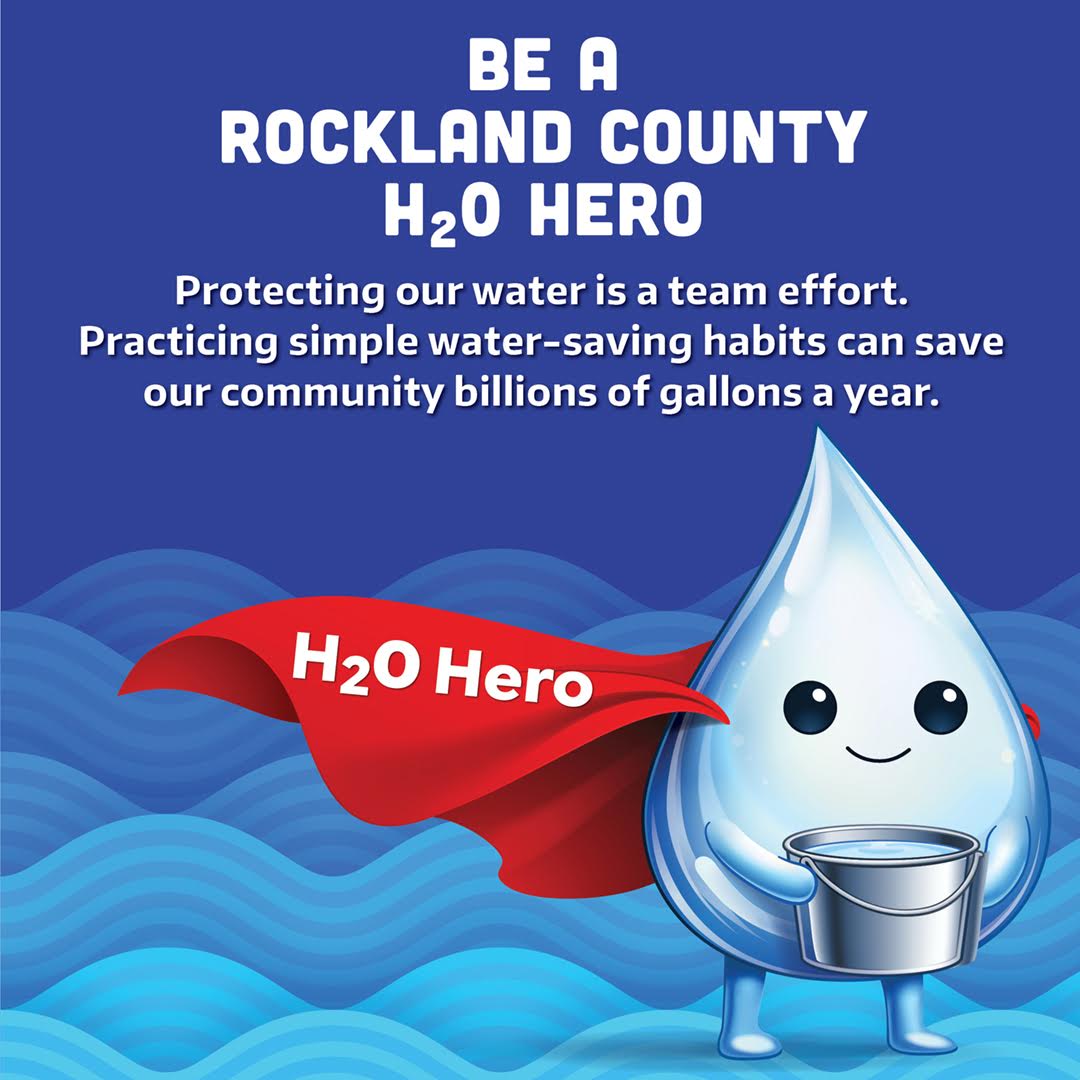
The County of Rockland is urging residents and businesses to take immediate steps to reduce water usage following a Drought Watch issued by the New York State Department of Environmental Conservation (DEC) for much of the state.

Although rain may be in the forecast, precipitation levels during August and September have remained significantly below seasonal averages, contributing to low streamflows in key waterways, including the Ramapo River. These conditions have triggered a Stage I Drought in Rockland County, prompting voluntary water conservation measures to help preserve the local water supply.

“We’re asking everyone in the community — homeowners, renters, and business owners — to take simple but meaningful steps to conserve water during this period,” said local officials.


Recommended Water Conservation Measures

Residents are strongly encouraged to adopt the following practices:

  • Avoid unnecessary outdoor water use. Limit activities such as car washing, power-washing surfaces, and irrigating lawns.

  • Reuse collected water from rain barrels, dehumidifiers, or air conditioning units for watering plants and gardens.

  • Mow less frequently. Allowing lawns to grow longer reduces the need for watering.

  • Refrain from hosing down sidewalks or driveways. Use brooms or blowers instead.

  • Take shorter showers and avoid filling bathtubs completely.

  • Repair leaks. Fix dripping faucets, running toilets, and leaking garden hoses promptly.

  • Upgrade to efficient fixtures. Install EPA WaterSense and ENERGY STAR® certified plumbing and landscaping equipment to reduce water use indoors and outdoors.


Why Conservation Matters Now

The DEC’s Drought Watch is the first of four levels in the state’s drought response framework and signals the need for public awareness and voluntary action. While a Stage I designation does not impose mandatory restrictions, officials warn that continued dry conditions could escalate conservation requirements if water supply levels decline further.


Stay Informed and Take Action

Residents seeking more information on how to conserve water at home or in the workplace are encouraged to visit the New York State DEC website for detailed tips and resources:
www.dec.ny.gov/lands/5011.html

Continue Reading
Advertisement

Government

Rockland County Launches $2 Million Emergency Food Plan Amid Federal SNAP Lapse

Published

on

The County of Rockland has approved a $2 million Emergency Food Assistance Plan with the Regional Food Bank to help families impacted by the federal SNAP benefit lapse caused by the ongoing government shutdown.

More than 19,000 Rockland households, including over 54,000 children and adults, are affected and now face increased food insecurity.

The plan will roll out in two phases through November 30. The first phase, now underway, includes $700,000 in grants to 43 local food pantries and $300,000 for countywide food distribution events. A second phase will follow if the shutdown continues.

At the first event, held November 6 at Clover Stadium in Pomona, volunteers distributed 20,000 pounds of food—enough to serve about 375 households. More events will be announced in the coming days, and the Regional Food Bank is seeking volunteers to help with future distributions.

The second phase, set to activate November 15–30 if the federal shutdown continues, will extend the same structure to sustain support through the end of the month.

“We’re grateful for the outpouring of support from Rockland County officials and residents,” said Regional Food Bank CEO Tom Nardacci.

Continue Reading

Government

Rockland County Passes Landmark “Damaging Deepfake Act” to Combat AI-Generated Abuse and Digital Deception

Published

on

New City, NY — November 6, 2025

Rockland County lawmakers have taken a firm stand against the misuse of artificial intelligence with the unanimous passage of the “Damaging Deepfake Act,” a groundbreaking local law that criminalizes the knowing creation or distribution of deceptive digital media that falsely depicts real people without their consent.

The legislation—sponsored by County Legislator Dana Stilley—targets the growing threat of deepfakes: hyper-realistic images, videos, and audio generated by AI to impersonate individuals or fabricate events. Under the new law, those found guilty of weaponizing AI for harassment, fraud, or impersonation could face fines or jail time, with harsher penalties for repeat or malicious offenses.

“The rapid spread of manipulated videos and audio doesn’t just distort reality—it endangers reputations, safety, and trust,” Stilley said. “When someone’s face or voice can be stolen with a few clicks, we must take action. With this legislation, we are safeguarding truth and protecting our residents.”


Rising Threat of Deepfakes

According to recent data, the number of deepfake creations has exploded from roughly 500,000 in 2023 to a projected 8 million in 2025. Nearly 98% of all deepfake videos are pornographic, disproportionately targeting women. AI-driven scams and impersonation frauds are also on the rise, costing U.S. victims over $12 billion in 2023, with losses expected to triple by 2027.

During a public hearing, Stefany Ovalles, Director of Immigration and Human Trafficking Services at the Center for Safety & Change, described the devastating effects of these technologies in domestic violence and revenge pornography cases.

“Perpetrators can now control and coerce their victims without even having access to explicit material,” Ovalles said. “This law helps protect women and children, who are statistically the most likely to be victims of domestic violence and sextortion.”

Ovalles added that sextortion cases involving youth are also increasing, including incidents in local school districts.


Protecting Victims and Upholding Consent

Dr. William P. Mullaney, President of Rockland Community College, praised the measure and said the legislation sends a powerful message about digital ethics and accountability.

“These are not harmless pranks—they are acts of digital violation that can harm victims for years to come,” Mullaney said. “Consent matters, even in the digital world.”

He noted that across the country, high school and college students have found their faces inserted into false and explicit images created by artificial intelligence—often with long-lasting emotional and reputational consequences.


A Growing Movement Against Digital Deception

While some federal and state laws address aspects of digital impersonation and defamation, agencies such as the U.S. Copyright Office have acknowledged that current legal protections remain inadequate. Rockland County now joins a small but growing number of jurisdictions enacting local measures to directly combat the misuse of AI.

Legislature Chairman Jay Hood Jr. said the law reinforces community trust and accountability in an era of fast-evolving technology.

“Deepfakes are digital lies that can destroy lives in seconds,” Hood said. “This local law gives us the means to help protect residents and businesses—and sends a clear message that digital deception will not go unchecked.”


Looking Ahead

As artificial intelligence continues to evolve, Rockland County’s new law represents one of the strongest local responses to date against the misuse of AI for deception, exploitation, and abuse. Lawmakers say the measure underscores a simple but vital principle in the digital age: authenticity and consent still matter.

Continue Reading

Trending