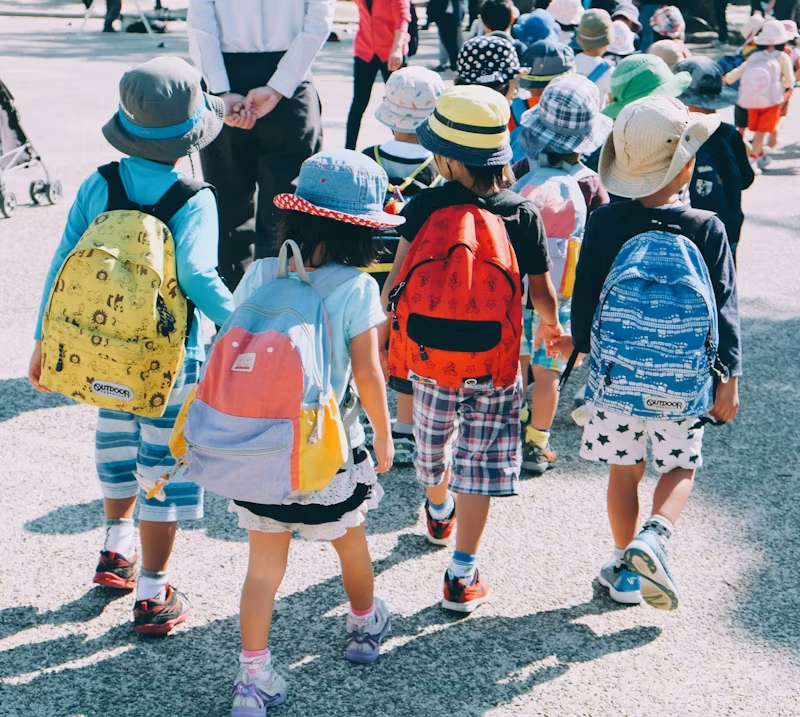
As a new school year gets underway, social media feeds will soon be filled with the familiar first-day-of-school photos: children standing on the front porch with their backpacks, holding signs announcing their grade, and smiling for the camera before heading off to class.
While these photos are a fun way for families to celebrate a milestone, parents should take a moment before posting to consider how much personal information the picture may reveal.
The National Center for Missing & Exploited Children (NCMEC) is reminding families to make online safety part of their back-to-school routine. The organization specifically cautions parents about information that can appear in seemingly innocent school photos, including a child’s full name, school name or logo, teacher’s name, street signs, house numbers and other identifying details.
A photo can also reveal a child’s daily routine or where they spend much of their time.
The Problem Isn’t the Photo — It’s the Information Around It
Parents do not necessarily need to stop sharing their children’s accomplishments and special moments online. The bigger concern is how much identifying information accompanies the photo.
A typical first-day picture could potentially show a child’s name on a backpack or sign, the name or logo of the school, a bus number, a street address or even a recognizable neighborhood location.
Adding a caption such as a child’s full name, age, school, teacher and grade can provide even more information.
NCMEC recommends taking a few moments to examine photos before posting them and removing or obscuring identifying details when appropriate.
Once It’s Online, It’s Difficult to Control
Parents should also remember that social media privacy settings do not guarantee that a photograph will remain private.
The Federal Trade Commission advises people to think carefully before posting because photos and other content can be copied, screenshotted, recorded and shared beyond the audience originally intended. Even deleting a post later does not necessarily mean the image has disappeared from the internet.
That is particularly important when the person in the photograph is a child who may not fully understand the long-term implications of having personal information available online.
A Quick Check Before You Hit Post
Before sharing a back-to-school picture, parents may want to ask:
- Does the photo show the child’s full name?
- Is the school name or logo visible?
- Is a teacher’s name visible?
- Can someone identify our home or street?
- Does the photo reveal where or when the child will be?
- Have I included unnecessary personal information in the caption?
- Would I be comfortable with this image being copied and shared outside my intended audience?
Cropping a photo, covering identifying information or choosing a less specific caption can reduce the amount of information being shared.
Back-to-school photos are a way for families to celebrate an exciting milestone. A few extra seconds before posting can help ensure that the celebration doesn’t reveal more about a child than a parent intended.
The goal isn’t to take the fun out of sharing these moments. It’s simply to remember that a cute picture can contain more information than it appears to at first glance.