Connect with us

Community

Before Refrigerators, Rockland Lake Supplied Ice to New York City

Published

on

It’s hard to imagine today, but before refrigerators and freezers became common, New York City’s food, restaurants, hospitals, and breweries depended on one unlikely place for ice: Rockland Lake.

During the 19th century, this quiet lake in Rockland County became one of the nation’s largest sources of natural ice, supplying millions of pounds each winter to a rapidly growing New York City. At the height of the industry, Rockland Lake was known as “The Icehouse of New York City.”

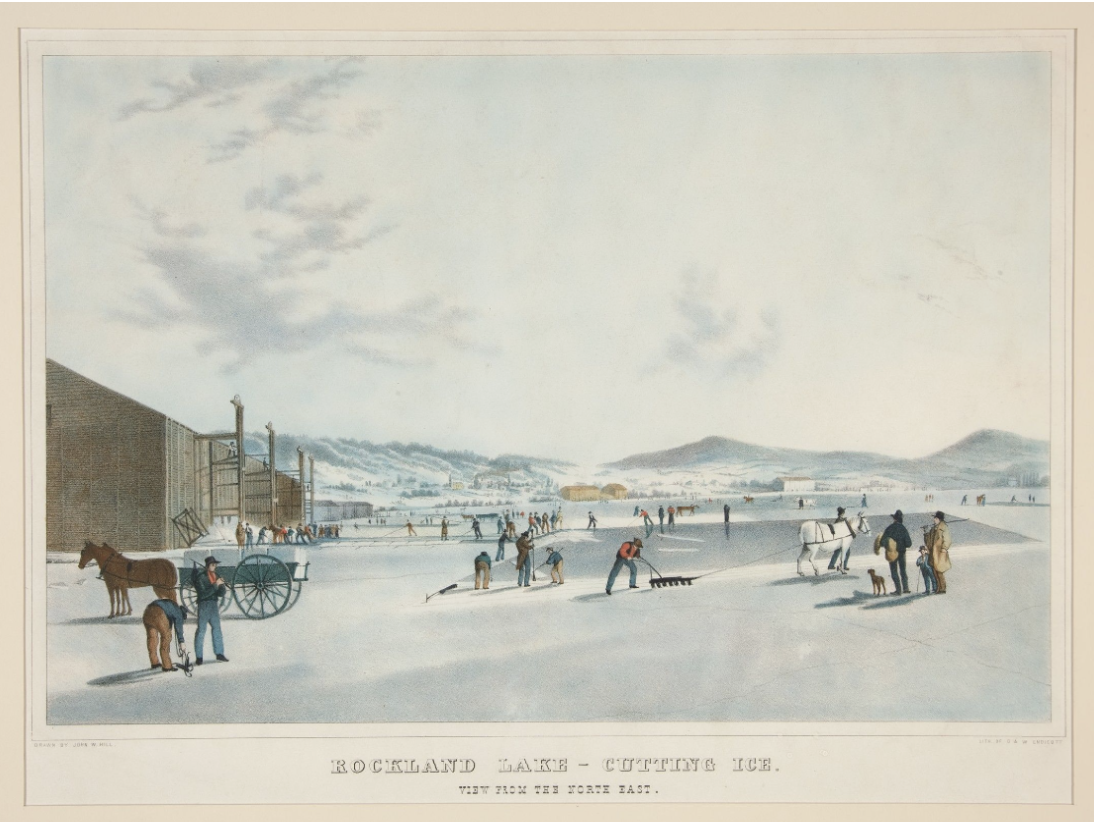
Every winter, once the ice reached about a foot thick, hundreds of workers took to the frozen lake. Using horse-drawn plows, they carved the surface into a giant checkerboard before cutting enormous blocks of ice by hand.

The blocks were floated through narrow channels, lifted onto conveyor systems, and packed into massive icehouses insulated with sawdust. From there, they were loaded onto trains and barges for the trip to New York City, where they were used to preserve food long before mechanical refrigeration existed.

The arrival of the Rockland Lake Railroad in the 1860s helped turn the lake into the center of a booming industry. Ice harvested in Rockland could quickly reach markets throughout the region, making the county an essential part of everyday life in New York City.

The ice business created hundreds of jobs for local residents, from laborers and railroad workers to barge crews and carpenters. During the winter months, the lakeshore buzzed with activity as thousands of tons of ice were harvested and stored for use throughout the year.

But technology eventually changed everything.

By the early 20th century, electric refrigeration began replacing natural ice, and demand for ice harvested from lakes quickly declined. Within a few decades, the once-thriving industry had disappeared, along with the towering icehouses and rail lines that made Rockland Lake famous.

Today, Rockland Lake State Park is known for its scenic trails, fishing, cycling, and outdoor recreation. Families stroll the shoreline, cyclists circle the lake, and anglers cast their lines where workers once harvested enormous blocks of ice destined for New York City.

Few visitors realize they’re standing at the site of an industry that helped feed and preserve one of the world’s largest cities.

While the icehouses are gone and the trains no longer run, Rockland Lake’s role in New York’s history remains one of the county’s most fascinating—and often overlooked—stories.

Photo image from Yale University

Continue Reading
Advertisement
Click to comment

Leave a Reply

Your email address will not be published. Required fields are marked *

Community

Why Is It Called Hook Mountain? The History Behind Rockland’s Landmark

Published

on

Rising nearly 730 feet above the Hudson River, Hook Mountain is one of Rockland County’s most recognizable natural landmarks. With breathtaking views, challenging hiking trails, and one of the best spots in the region to watch migrating birds of prey, the mountain draws thousands of visitors every year.

But have you ever wondered how Hook Mountain got its name?

The answer dates back more than four centuries to the arrival of Dutch explorers along the Hudson River.

A Name Rooted in Dutch History

The name “Hook Mountain” is widely believed to have originated from the Dutch word “hoek,” which translates to “point,” “corner,” or “hook.”

As Dutch explorers navigated the Hudson River in the early 1600s, they frequently named geographic features based on their appearance. Hook Mountain’s rocky ridge extends toward the river, forming a prominent point along the shoreline that likely inspired its name.

Over time, “hoek” evolved into the English word “hook,” and the name has remained ever since.

The mountain is one of many places throughout the Hudson Valley that reflect the region’s Dutch colonial heritage, a legacy still visible in the names of towns, roads, and landmarks across Rockland County.

A Landscape with Ancient Roots

Long before European settlers arrived, the area surrounding Hook Mountain was home to the Lenape people, who used the Hudson Valley’s forests and waterways for hunting, fishing, and travel.

The mountain itself is far older than human history. Geologists say its towering cliffs were formed more than 190 million years ago when volcanic activity helped shape the landscape during the breakup of the supercontinent Pangaea.

Millions of years later, glaciers from the last Ice Age carved the Hudson Valley, creating the dramatic cliffs and sweeping river views that visitors enjoy today.

Hook Mountain is part of the Palisades, the line of basalt cliffs that stretches along the western shore of the Hudson River and is considered one of the region’s most significant geological formations.

A Haven for Wildlife

Today, Hook Mountain is more than a popular hiking destination—it’s also one of the Hudson Valley’s premier wildlife viewing areas.

Each fall, birdwatchers gather along the summit to witness the annual migration of hawks, falcons, vultures, and bald eagles as they ride thermal air currents south for the winter.

The park is also home to deer, foxes, turtles, snakes, and a diverse array of native plants that thrive within its protected forests and rocky terrain.

From Quarry to Conservation

The mountain’s future was once far from certain.

During the late 19th and early 20th centuries, sections of Hook Mountain were quarried for trap rock, which was used in road construction and other building projects. The operations permanently altered parts of the landscape and raised concerns about continued development.

Public support for preserving the mountain eventually led to conservation efforts that protected the area from further quarrying.

Today, Hook Mountain is part of Hook Mountain State Park, where residents and visitors can hike miles of scenic trails, enjoy panoramic views of the Hudson River, and experience one of Rockland County’s most treasured outdoor destinations.

More Than Just a Name

While Hook Mountain’s name may sound simple, it reflects centuries of history—from the Lenape who first called the region home, to Dutch explorers who mapped the Hudson River, to the conservationists who fought to preserve the mountain for future generations.

The next time you reach the summit and take in the sweeping views of the Hudson, remember that you’re standing on a landscape shaped by ancient volcanoes, glaciers, and more than 400 years of local history.

Photo courtesy: The Historical Society of Rockland County

Continue Reading

Community

Why Rockland Residents Still Call It the Tappan Zee Bridge

Published

on

For more than 60 years, the Tappan Zee Bridge was more than a way across the Hudson River. It was a landmark that shaped Rockland County’s growth, connected communities, and became part of everyday life for generations of residents.

Opened on December 15, 1955, the original Tappan Zee Bridge linked South Nyack and Tarrytown, providing a vital connection between Rockland and Westchester counties. At the time, the 3.1-mile bridge was the longest in New York State and represented a major engineering achievement.

The bridge helped transform Rockland from a largely rural county into a growing suburban community. As commuting became easier, towns such as Nanuet, New City, Pearl River, and Clarkstown saw rapid residential and commercial development.

The name itself carries the history of the region. “Tappan” refers to the Indigenous Tappan people who lived along the Hudson River, while “Zee” is the Dutch word for sea, describing the river’s unusually wide expanse at that location.

By the early 2000s, the aging bridge was carrying far more traffic than engineers originally anticipated. After decades of debate, a replacement was built, with the new crossing opening in 2017 and 2018. The structure was officially named the Governor Mario M. Cuomo Bridge.

But for many Rockland residents, the name change never replaced the memories attached to the original bridge.

It was the bridge people crossed to go to work, visit family, head to shopping trips, and begin road trips. It was where generations of residents sat in traffic, watched sunsets over the Hudson, and knew they were almost home.

Names are tied to memories, and for many people who grew up in Rockland County, “the Tappan Zee” is more than a bridge name—it is a connection to a time, a place, and a shared experience.

The new bridge may carry a different official name, but in the hearts of many residents, the crossing will always be the Tappan Zee Bridge.

Photo by Allison Weiss

Continue Reading

Trending