Community
After 32 Days on the Run, Lost Dog “Peaches” From Rockland County Rescued After Epic Survival Journey

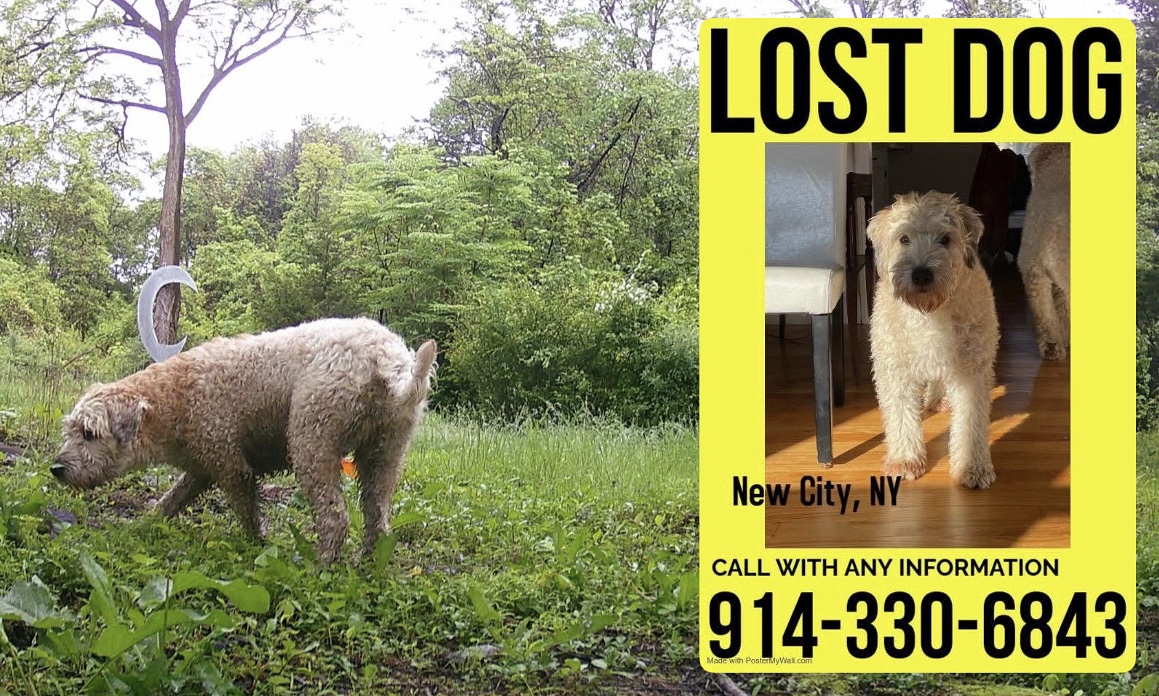
New City, NY (June 2025) — After 32 harrowing days on the run — crossing highways, dodging traffic, and even joining a roaming group of foxes — Peaches, a beloved dog from New City, has finally been safely captured and reunited with her family, thanks to the persistence and expertise of Buddha Dog Rescue Rescue and Recovery and the compassion of the Nanuet community.
Peaches went missing on May 17, 2025, and within ten days had already traveled nearly three miles. Early rescue efforts, though well-intentioned, were hampered by missteps — including placing a trap that caught wildlife instead of the dog. This frightened Peaches and made her wary of further attempts at capture.
Her incredible survival instincts kicked in, and Peaches began traveling with a group of foxes, often seen lounging in medians and grassy knolls along the Palisades Parkway — an extremely dangerous area where speeds exceed 70 mph. Each time someone attempted to call out or chase her, she would return to the highway, making the situation increasingly perilous.
Buddha Dog Rescue and Recovery, a seasoned lost dog recovery team, took over the operation despite complications caused by earlier efforts. Their approach: no chasing, no yelling — just careful strategy, tracking, and trust-building. After relocating to Nanuet, Peaches encountered a community that followed these guidelines perfectly. Residents observed silently, reported sightings, and helped the team establish her movement patterns.
To overcome her fear of traps, BDRR used an enclosure trap and spent days conditioning her to enter safely. On a rainy night, with her fox companions close behind, Peaches finally stepped into the trap — and was safely captured after more than four weeks on the run.
VIDEO – Watch Peaches enter the trap
“This wasn’t just a rescue — it was a battle of patience, compassion, and perseverance,” said the BDRR team. “Peaches is a true survivor, and we’re endlessly grateful to the Nanuet community for helping bring her home.”
Read the full story below from Buddha Dog Rescue and Recovery
After 32 Days on the Run, Peaches is Finally Safe!
New City, NY — Buckle up, buttercups. What you’re about to read isn’t just a story, it’s a heart-stopping, fox-chasing epic story of survival, instinct, and sheer determination. This isn’t just a lost dog tale. This is The Odyssey: Suburban Canine Edition.
Let’s rewind.
On May 17th, Peaches went missing in New City, NY. It took just ten days for her to cover nearly three miles We, at BDRR, were called in ten days later. Normally, we don’t take on cases where another party is already involved , not out of ego, but because we end up untangling a web of good intentions gone sideways. And in this case, well… that web was practically a net.
We debated taking it on. But after nearly two decades in the world of lost dog recovery, something in our gut said if we don’t step in, Peaches won’t make it. So we did.
Those ten day: A Trap, Wildlife, and Rookie Mistakes
Before we got involved, a trap had already been set in an area crawling with wildlife, in the middle of baby season. Our first question we asked, “Was anything caught in the trap?”
“Yes,” they said. “A fox. And a raccoon.”
Well, that explains a lot.
Dogs are smart. When they see another animal caught in a trap, struggling, scared…they learn. And what they learn is: stay away. Peaches did just that. So, thanks to that initial trap, we were already starting five steps behind.

The Fox & the Hound — Literally
As if the odds weren’t steep enough, Peaches decided to join forces with a roaming fox gang. Yes. Foxes. Plural. She traveled with them, played with them, like a Disney movie directed by Quentin Tarantino. It was cute…until she started using the Palisades Parkway as her personal thoroughfare. We’re talking median lounging, grassy knoll napping, and dangerously close encounters with passing cars going 70 plus mph. One misstep, and it would’ve been tragedy for Peaches and passing motorists.
When Help Hurts
Over and over, we warned: Do not chase Peaches. Do not call out to her. Do not approach.
And yet…people did.
One woman, after promising not to engage, ran through the woods screaming Peaches’ name, terrifying the dog and blowing an operation we’d spent hours preparing.
How do we know? Because she ran right into us. On site. In real time.
Every time someone chased Peaches, her next known location was back on the Palisades Parkway. It became her safety zone…the one place she knew humans wouldn’t follow. And that, my friends, is exactly how dogs get killed.
This work isn’t glamorous. It’s not just cute reunions and “happy tails.”
It’s death threats from locals who “don’t believe in trapping.” It’s strangers who think a scared, exhausted dog is choosing them like some sort of four-legged soulmate. It’s ER visits, sleepless nights, cold all nighters in car seats, poison ivy, ticks and the gut-wrenching fear that you might not get there in time.
And yet… we press on.
The Turning Point: Nanuet
Peaches crossed the Palisades again, five miles from her last sighting and landed in a neighborhood that finally listened.
No chasing. No yelling. No vigilantes. Just quiet support and eyes out of sight that reported sightings
With cooperation (hallelujah!), we established her pattern, pinpointed her schedule, and confirmed her new hangout spots… still rolling with her fox crew.
We strategically placed cameras. We monitored every move. When Peaches finally approached the trap, she watched. She paced. She knew what it was. Her previous trauma with traps had turned her into a cautious, street-smart trap savvy survivalist. We needed a new plan.
Enter: The Enclosure Trap.
Slowly, patiently, we conditioned her. First, to sniff. Then, to step in. Then, to walk all the way to the back. It took days and gallons of coffee and bags of sour patch kids …but we got there.
Last night in the pouring rain.
Peaches appeared like clockwork, flanked by foxes, like tiny red-tailed bodyguards.
She sniffs.
She cautiously steps in.
And BOOM
We got her.
After 32 days.
Countless crossings of the Palisades Parkway.
More than a few brushes with disaster.
Sleepless nights. Threats. Tears. Foxes. ER visits.
Peaches is SAFE.
Alive. Loved. And home.
This was no ordinary rescue.
This was a war fought with compassion, strategy, and more emotional roller coasters than a soap opera marathon. But it was worth every mile.

Welcome home, Peaches. You wild little legend.
To Sharon and Jim Gordon, Joyce, Anthony, Isabel and the entire Nanuet community…thank you from the bottom of our hearts. Your willingness to listen, to hold back when every instinct said to run forward, and to allow us the space to work methodically and carefully made all the difference.
Because of your compassion and cooperation, Peaches is safe today.
This rescue wasn’t easy but knowing we had a community standing behind us made it possible. We are deeply grateful for your support and will never forget the role you played in bringing Peaches home.





Apple Picking, Pumpkins and Hayrides: Fall Is Back at Dr. Davies Farm

Lafayette Theatre Packs October With Movies, Halloween Events and Local Premiere

Finkelstein Library Toy Drive & Swap Set for October 18

Stony Point Fall Festival Set for October 3 as Part of America 250

We’re Back: A Note to Our Readers After Website Updates

In Plain Sight World Premiere at Penguin Rep Theatre | Sept. 25–Oct. 18, 2026

A Taste of Tradition: Leonardo’s Italian Deli & Catering Serves Up Authentic Flavor in New City

Town of Clarkstown Unveils New Fitness Equipment at Street Community Center

Ayoo Chill Wows Crowd with Powerful Rendition of “Nessun Dorma” at Rockland Music Fest at Nanuet Town Centre
-
 Police/Fire/EMS3 days ago
Stony Point Fall Festival Set for October 3 as Part of America 250
-
 Uncategorized3 days ago
We’re Back: A Note to Our Readers After Website Updates
-
Entertainment2 days ago
In Plain Sight World Premiere at Penguin Rep Theatre | Sept. 25–Oct. 18, 2026
-
Police/Fire/EMS2 days ago
Clarkstown Welcomes New K-9 Argo to Police Department