Connect with us

Community

Autism Spectrum Disorder (ASD) Key Facts, Symptoms, and Supportive Strategies

Published

on

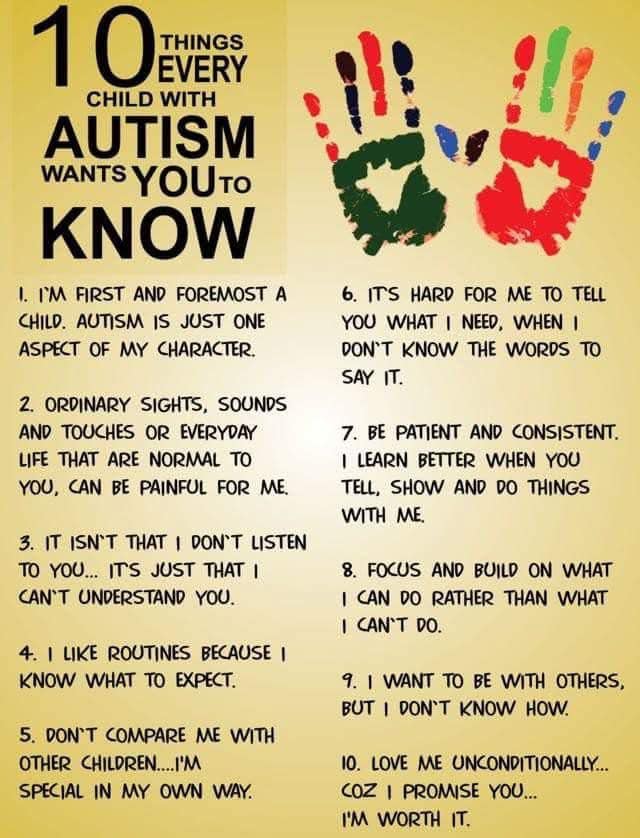
Autism Spectrum Disorder (ASD) is a neurodevelopmental condition marked by difficulties in social communication, repetitive behaviors, and limited interests.

Around 1 in 36 children in the U.S. are affected by ASD. Boys are more commonly diagnosed than girls, with a ratio of 4:1. The exact causes are not fully understood. It is believed to result from a combination of genetic and environmental factors.

Symptoms include challenges with social interactions, such as trouble making eye contact and interpreting social cues. Repetitive actions, like hand-flapping or rocking. Limited interests, often intensely focused on particular subjects. Sensory sensitivities, including heightened reactions to sound, light, or touch.

Usually ASD is identified during early childhood, around 2-3. Diagnosis is based on behavioral observations and developmental progress. There is no single test to diagnose ASD. ASD is a spectrum, meaning symptoms and abilities vary widely among individuals. Traditionally, ASD is classified into three levels based on the level of support needed. Level 1 requiring minimal support, level 2 substantial support and level 3 requiring very substantial support.

Although there is no cure, early intervention can significantly improve outcomes. People with ASD are just as capable of learning and achieving as other people. ASD is not caused by vaccines or parenting choices. Many individuals with ASD have unique strengths and talents. It is crucial to foster understanding, acceptance, and inclusion for those with ASD.  Many individuals with ASD may also have other conditions, such as ADHD, anxiety, or intellectual disabilities, which can influence how they experience the world and how treatment is approached.

Advocating for better resources, education, and policy changes is key to improving the lives of people with ASD and ensuring a more inclusive society. Discuss the concept of neurodiversity—the idea that neurological differences like ASD are part of human diversity rather than disorders—could help shift the conversation toward acceptance and inclusion, recognizing that people with ASD can contribute valuable perspectives to society.

Continue Reading
Advertisement

Community

Tiffany Haddish Visits Nyack Library with She Ready Foundation

Published

on

The Nyack Library welcomed comedian, actress, and author Tiffany Haddish and members of her She Ready Foundation for a memorable visit filled with books, inspiration, and community connection.

Library staff and young readers had the opportunity to meet Haddish and learn more about her children’s book, Layla the Last Black Unicorn. The visit also provided an opportunity to learn about the mission of the She Ready Foundation, which works to support and empower young people in foster care.

The special visit was met with enthusiasm by the Nyack Library community. Haddish’s book gave children an opportunity to connect with a story about identity, courage, and being proud of who you are, while the foundation’s work highlighted the importance of providing young people with encouragement and resources.

The library expressed its appreciation to Haddish and the She Ready Foundation team for spending time with the community and making the day so meaningful.

“A very special thank you to Dr. Gordon, Desiri, and Leeron,” the library shared, noting that the visit was a day the community would not soon forget.

For the children and families who attended, the event was more than a celebrity appearance. It was an opportunity to celebrate reading, storytelling, and the positive impact that community leaders can have on young people.

The Nyack Library also extended its gratitude to everyone who helped make the visit possible.

Photo credit: Aldona Pilmanis

Continue Reading

Community

Back-to-School Photos: Why Parents Should Think Before Posting

Published

on

As a new school year gets underway, social media feeds will soon be filled with the familiar first-day-of-school photos: children standing on the front porch with their backpacks, holding signs announcing their grade, and smiling for the camera before heading off to class.

While these photos are a fun way for families to celebrate a milestone, parents should take a moment before posting to consider how much personal information the picture may reveal.

The National Center for Missing & Exploited Children (NCMEC) is reminding families to make online safety part of their back-to-school routine. The organization specifically cautions parents about information that can appear in seemingly innocent school photos, including a child’s full name, school name or logo, teacher’s name, street signs, house numbers and other identifying details.

A photo can also reveal a child’s daily routine or where they spend much of their time.

The Problem Isn’t the Photo — It’s the Information Around It

Parents do not necessarily need to stop sharing their children’s accomplishments and special moments online. The bigger concern is how much identifying information accompanies the photo.

A typical first-day picture could potentially show a child’s name on a backpack or sign, the name or logo of the school, a bus number, a street address or even a recognizable neighborhood location.

Adding a caption such as a child’s full name, age, school, teacher and grade can provide even more information.

NCMEC recommends taking a few moments to examine photos before posting them and removing or obscuring identifying details when appropriate.

Once It’s Online, It’s Difficult to Control

Parents should also remember that social media privacy settings do not guarantee that a photograph will remain private.

The Federal Trade Commission advises people to think carefully before posting because photos and other content can be copied, screenshotted, recorded and shared beyond the audience originally intended. Even deleting a post later does not necessarily mean the image has disappeared from the internet.

That is particularly important when the person in the photograph is a child who may not fully understand the long-term implications of having personal information available online.

A Quick Check Before You Hit Post

Before sharing a back-to-school picture, parents may want to ask:

  • Does the photo show the child’s full name?
  • Is the school name or logo visible?
  • Is a teacher’s name visible?
  • Can someone identify our home or street?
  • Does the photo reveal where or when the child will be?
  • Have I included unnecessary personal information in the caption?
  • Would I be comfortable with this image being copied and shared outside my intended audience?

Cropping a photo, covering identifying information or choosing a less specific caption can reduce the amount of information being shared.

Back-to-school photos are a way for families to celebrate an exciting milestone. A few extra seconds before posting can help ensure that the celebration doesn’t reveal more about a child than a parent intended.

The goal isn’t to take the fun out of sharing these moments. It’s simply to remember that a cute picture can contain more information than it appears to at first glance.

Continue Reading

Trending