Connect with us

Government

Harckham, Paulin and Treatment Providers Blast Unfair, Punitive Medicaid Auditing Practices

Published

on

Albany, NY – New York State Senator Pete Harckham and Assemblymember Amy Paulin, along with other legislators and behavioral health care, spoke in unison at a special press conference in the State Capitol today, calling for the FY2024-2025 State Budget to include a meaningful reform of current practices utilized by the NYS Office of the Medicaid Inspector General (OMIG) when it audits healthcare agencies that provide essential services to New Yorkers with Medicaid insurance.

A new OMIG reform bill (S.5329D / A.6813), introduced by Harckham and Paulin, seeks to rectify tactics used during Medicaid audits conducted by the OMIG that are needlessly punitive and, ultimately, ineffective in preventing fraud and abuse in the healthcare system. These audits take time and resources away from healthcare and mental hygiene agencies providing essential services to New Yorkers with Medicaid insurance.

“New York patients cannot afford to lose any more behavioral health providers, especially over unintentional administrative errors,” said Harckham. “The senseless undermining of Substance Use Disorder programs in the middle of an opioid epidemic needs to stop. Let’s not lose sight that these programs save lives, so regulatory efforts should be in line with supporting and improving services, not harming them.”

“The role of the NYS Office of the Medicaid Inspector General is to root out fraud and abuse,” said Paulin. “However, this should not mean that OMIG should have the ability to wipe out entire programs and services based on technical errors, state system issues, or minor discrepancies, especially when the service was delivered appropriately. This practice is crippling and risks the continued viability of New York’s safety net system. I urge the Legislature to include the provisions of our bill in the budget to protect our health care providers and safeguard OMIG’s role in ensuring Medicaid’s integrity.”

Current OMIG audit practices include application of extrapolation to clerical errors, which has resulted in disproportionate findings and enormous fines that can shut down an entire program or impact a Medicaid provider. This practice has been devastating to providers and risks the continued viability of New York’s safety net system. 

               Clerical errors result in care providers being punished and financially crippled.  

Continue Reading
Advertisement

Government

Rockland County Residents Urged to Check for Water Leaks

Published

on

A simple home water audit can help residents find hidden leaks, reduce water waste and lower household utility bills.

ROCKLAND COUNTY, NY — The Rockland County Water Advisory Council is encouraging residents to conduct a simple home water audit to identify hidden leaks, improve water efficiency, reduce utility costs and help protect the county’s long-term water resources.

While homeowners often focus on conserving water outdoors during the summer, indoor water use can account for a significant portion of a household’s overall water consumption. Small leaks, aging plumbing fixtures and inefficient appliances can waste thousands of gallons of water each year without being noticed.

A home water audit can help residents identify where water is being wasted and find opportunities to conserve.

Four Simple Ways to Check Your Home

The Water Advisory Council recommends that residents start by:

  • Checking the water meter: Make sure no water is being used in the home, then check the meter. Movement may indicate a hidden leak.
  • Testing toilets for leaks: Use dye tablets to check for silent toilet leaks that may otherwise go unnoticed.
  • Upgrading plumbing fixtures: Consider replacing older fixtures with WaterSense®-labeled products, which are designed to use less water while maintaining performance.
  • Inspecting irrigation systems: Check outdoor irrigation equipment for leaks, broken sprinkler heads and other problems that can waste hundreds of gallons of water during the summer.

Free Water Conservation Resources Available

Rockland County residents can also access resources designed to make water conservation easier.

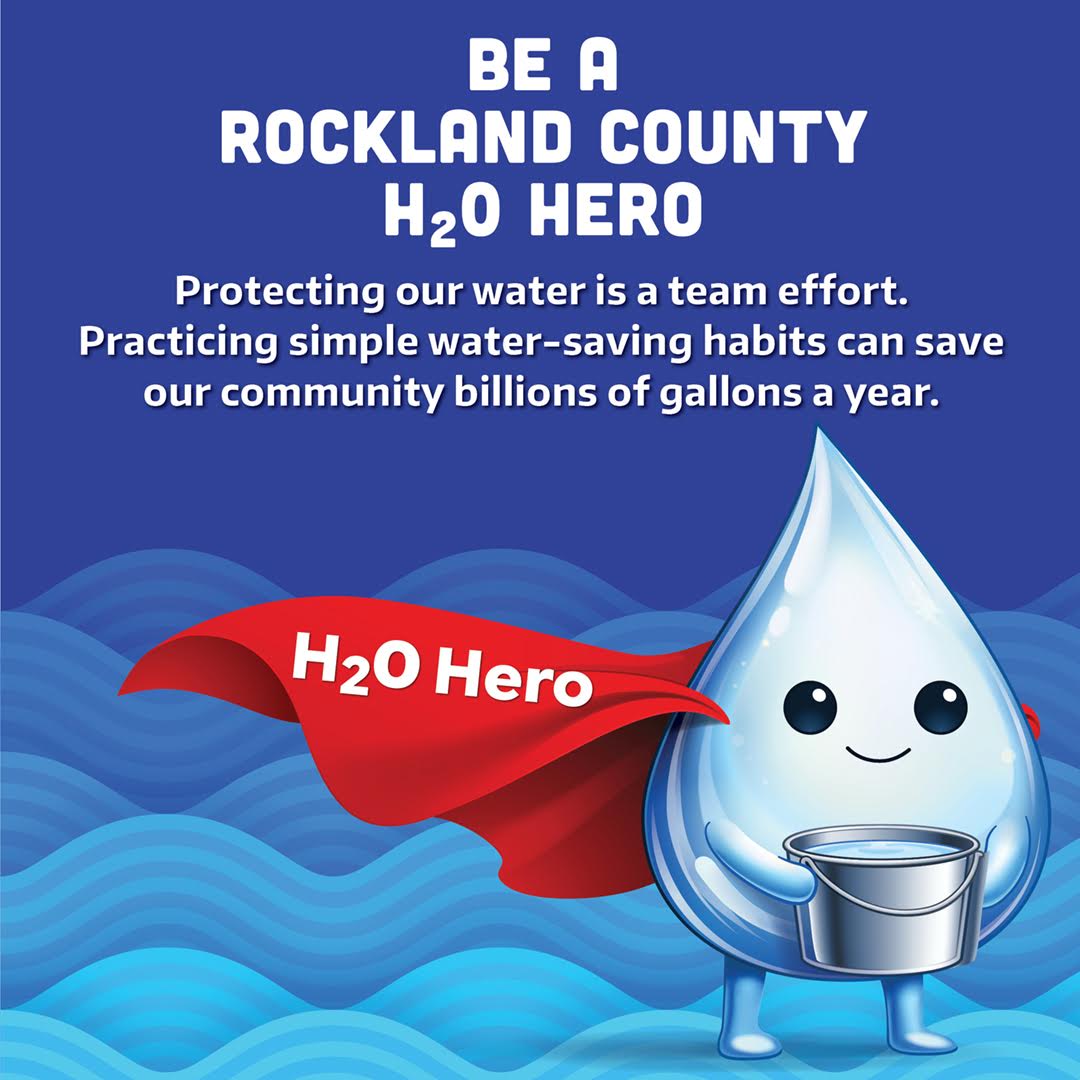
Residents can visit EPA WaterSense for information about saving water at home and use educational materials available through the Rockland County Water Hero program.

Rebates are also available through Veolia for qualifying WaterSense® products. Eligible products may include select toilets, showerheads, clothes washers, irrigation controllers and rain barrels.

The Water Advisory Council is also offering free water conservation tools, including:

  • Shower timers
  • Toilet leak-detection tablets
  • Moisture meters

Supplies are limited. Residents can pick up the tools at the Water Advisory Council office, find them at community events, or request them by signing up to become an H2O Hero through the Rockland Water Hero program. Visit Rockland Water Hero

The Rockland County Water Conservation Project is funded by the New York State Department of Environmental Conservation.

Continue Reading

Government

Rockland County Shares Back-to-School Safety Tips for Drivers, Students

Published

on

With the new school year just around the corner, Rockland County roads will soon become busier with children walking and biking to school, crossing streets and gathering at bus stops during the morning and afternoon commute.

The county is reminding parents, caregivers, students and drivers to take extra precautions to help keep children safe as they return to school.

Younger children can be especially difficult for motorists to see, while some students may be using a new bus stop, crossing unfamiliar streets or walking to school on their own for the first time.

Through its federally funded Safe Streets program, Rockland County is sharing several back-to-school safety reminders for students and motorists.

Safety Tips For Students

Students waiting for the bus are encouraged to:

  • Arrive at the bus stop early and avoid rushing.
  • Stay at least 10 feet away from the curb while waiting for the bus.
  • Look left, right and left again before crossing a street.
  • Never walk behind a school bus.

Safety Tips For Drivers

Motorists are reminded to slow down and remain alert when driving near schools, bus stops and areas where children may be walking or biking.

Drivers should also obey flashing school bus lights and stop as required when children are entering or exiting a school bus.

With more students expected on local roads once classes resume, the county is urging everyone to stay attentive and give children the extra time and space they need to travel safely.

Continue Reading

Trending