Connect with us

Community

There’s More Great News When It Comes To Parkland In Rockland County.

Published

on

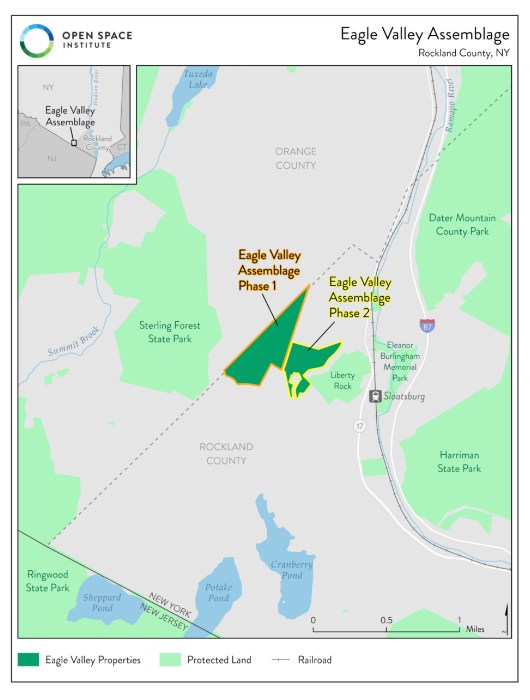
The Open Space Institute has acquired 132 acres in Sloatsburg as part of the Eagle Valley Assemblage conservation project, located in the corridor between Sterling Forest and Harriman State Parks. The project will enhance regional recreational opportunities and protect critical drinking water resources in an area facing heavy development pressure.
OSI intends to convey the land to the County, which is exploring opportunities for it, including creating a new county park with linkages between the Sloatsburg train station and other protected areas such as Harriman State Park, the Town of Ramapo’s Liberty Ridge Park, Eleanor Burlingham County Park, and Dater Mountain County Park.
OSI’s Eagle Valley Assemblage includes the 87-acre Eagle Valley property, which OSI purchased on March 14 for 1.6 million; and the 45-acre Cherso Realty property, which OSI purchased on May 17 for $1.275 million.
The newly protected properties, located within the Nakoma Brook drainage basin, play a critical role in safeguarding the Ramapo Valley Aquifer, which provides a third of Rockland County’s public water supply. The protection of these properties will safeguard downstream drinking water resources identified as priority acquisitions in the Rockland County Comprehensive Plan, Sloatsburg Comprehensive Plan, and the New York State Open Space Plan.
The Rockland County Legislature thanks the Open Space Institute for its amazing efforts!

Continue Reading
Advertisement

Community

Heat Safety Tips: How to Stay Safe During Hot Summer Weather

Published

on

As temperatures rise, so does the risk of heat-related illness. Spending time outdoors, working in the heat, or even staying in a home without adequate cooling can lead to dehydration, heat exhaustion, or heat stroke if proper precautions aren’t taken.

How to Stay Cool

  • Drink plenty of water throughout the day, even if you don’t feel thirsty.
  • Avoid sugary drinks and excessive alcohol, which can contribute to dehydration.
  • Wear lightweight, loose-fitting, light-colored clothing.
  • Stay in air-conditioned buildings whenever possible, or seek shade if you’re outdoors.
  • Limit strenuous outdoor activities during the hottest part of the day, typically between 10 a.m. and 4 p.m.
  • Take frequent breaks if working or exercising outside.
  • Use sunscreen and wear a wide-brimmed hat to protect yourself from direct sunlight.

Protect Children, Older Adults, and Pets

Young children, older adults, people with chronic medical conditions, and outdoor workers are at greater risk for heat-related illness. Check on elderly neighbors and relatives during periods of extreme heat.

Pets are also vulnerable. Always provide fresh water and shade, avoid walking dogs on hot pavement, and never leave a child or pet unattended in a parked vehicle—even for a few minutes.

Know the Signs of Heat Stroke

Heat stroke is a life-threatening medical emergency. Symptoms may include:

  • Hot, dry, or flushed skin
  • Rapid pulse
  • Rapid, shallow breathing
  • Body temperature above 105°F
  • Confusion, dizziness, disorientation, or unconsciousness

If someone is showing signs of heat stroke, call 911 immediately. Move the person to a cooler location, loosen or remove excess clothing, and begin cooling them with cool water, wet towels, or ice packs while waiting for emergency responders.

Taking simple precautions can help you and your family stay safe, healthy, and cool throughout the summer.

Continue Reading

Community

Fawn Season Is Underway: Why You Should Leave Baby Deer Alone

Published

on

As fawning season continues across the Hudson Valley, wildlife experts are reminding residents that if you come across a young fawn lying alone, the best thing you can do is leave it where it is.

Although it may appear abandoned, it is completely normal for a mother deer (doe) to leave her fawn alone for several hours while she forages for food. Does often hide their fawns in tall grass, gardens, wooded areas, or even near homes, where they hope predators will be less likely to approach.

The doe typically returns only a few times each day to nurse her fawn and may move it to a new location once it is safe. If people or pets are nearby, the mother may delay returning to avoid drawing attention to her baby.

Wildlife officials urge residents not to touch, move, or attempt to rescue a fawn unless it is clearly injured or its mother is confirmed to be dead.

Pet owners are also encouraged to keep dogs leashed when walking near wooded areas or tall grass during the next several weeks to avoid disturbing hidden fawns.

Remember: A fawn lying quietly by itself is usually not abandoned—it’s exactly where its mother expects it to be.

Continue Reading

Trending