Connect with us

Government

Legislator Davidson Invites Student Katherine Dely to Deliver Invocation at Rockland County Legislature Meeting

Published

on

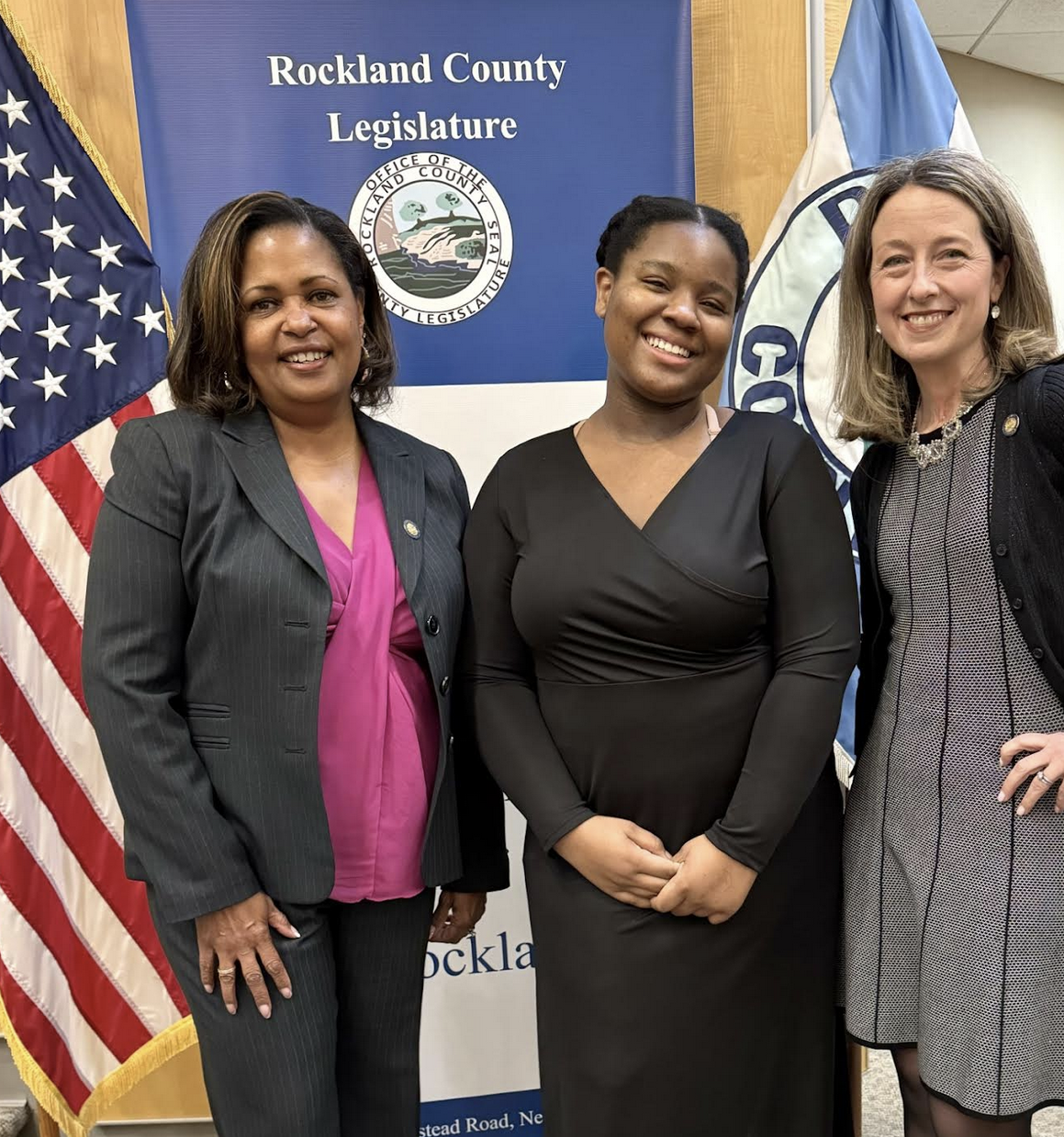
ROCKLAND COUNTY, NY – Just minutes after the Rockland County Legislature concluded its annual Black History Month Celebration, Katherine “Kat” Dely stepped forward to deliver the invocation at the start of the board’s regular meeting.

The 8th grader flawlessly delivered “An Ode We Owe,” an inspiring poem focused on issues important to young people — and Rocklanders of all ages – including climate change, equality, and economic justice.

Rockland County Legislator Beth Davidson invited Katherine to participate Davidson believed the poem was a fitting kickoff to Black History Month and a way to involve youth in calling for climate action. Legislator Davidson chairs the Environmental Committee.

Katherine attends Nyack Middle School, where she is a member of the marching band, and is also an actress. She’ll be in Nyack DramaWorks’ production of High School Musical 2 next month.

“Katherine did a fantastic job and inspired everyone in the room,” Legislator Davidson said. “Her voice will be heard by other youth and will help lend urgency to the fight for environmental justice.”

The duo spent time in advance of Tuesday’s meeting discussing the poem, its meaning and its potential significance to the generation that will bear the brunt of the climate crisis in the coming decades.

The poem was written by Amanda S.C. Gorman, the first person to be named National Youth Poet Laureate. Gorman first gained wide public attention when she read her poem, “The Hill We Climb,” at President Biden’s inauguration in 2021.

In 2022, Gorman delivered “An Ode We Owe” to the United Nations General Assembly. The poem concludes, “To anyone out there: I only ask that you care before it’s too late, That you live aware and awake, That you lead with love in hours of hate. I challenge you to heed this call, I dare you to shape our fate. Above all, I dare you to do good. So that the world might be great.”

Continue Reading
Advertisement

Government

Rockland County Promotes Native Plants and Water-Smart Landscaping

Published

on

The Water Advisory Council is encouraging residents to embrace water-smart landscaping practices that conserve water and support environmental health.

Officials recommend reducing nonfunctional lawn areas and replacing them with native plants, drought-tolerant landscaping, rain gardens, bioswales, and rain barrels. These practices help reduce water consumption, manage stormwater runoff, improve groundwater recharge, and increase resilience to climate change.

According to the Council, water demand in Rockland County rises from an average of 30 million gallons per day to as much as 45 million gallons per day during the warmer months, placing additional strain on local water supplies.

Residents are encouraged to consider native plants such as Creeping Phlox, Foamflower ‘Elizabeth Oliver,’ and Jacob’s Ladder, which require less watering once established and are well-suited to local conditions.

Examples of successful rain gardens featuring native plants can be found at Orangeburg Library, Bowline Point Park, Kennedy Dells County Park, and Piermont Library.

By replacing sections of lawn with native plants and incorporating features that manage rainwater naturally, residents can play a direct role in protecting Rockland County’s water resources.

The initiative is part of the county’s ongoing effort to promote sustainable landscaping and encourage participation in the national “Less Lawn More Life” movement.

Continue Reading

Government

Rockland Conservation & Service Corps Stream Team Helps Prevent Flooding and Protect Waterways

Published

on

Members of the Rockland Conservation & Service Corps are helping protect local communities through their work with the Rockland County Drainage Agency, inspecting and assessing streams throughout Rockland County.

The Corps’ Stream Team identifies obstructions such as fallen trees, debris, and sediment buildup that can restrict water flow and contribute to flooding during heavy storms. Members also document illicit discharges, erosion issues, and areas in need of sediment remediation.

The information collected helps county officials address potential problems before they become larger environmental or public safety concerns.

In addition to reducing flood risks, the Stream Team’s work supports water quality and helps maintain healthy ecosystems throughout the county. By monitoring local waterways and identifying issues early, the team plays an important role in protecting Rockland County’s natural resources and strengthening community resilience.

Officials say the partnership highlights the importance of proactive environmental stewardship and ongoing efforts to keep Rockland County’s streams healthy, safe, and flowing properly.

Continue Reading

Trending