Connect with us

Government

Rockland County Executive Ed Day Submits 2024 Proposed Budget With 2% Tax Cut to Legislature

Published

on

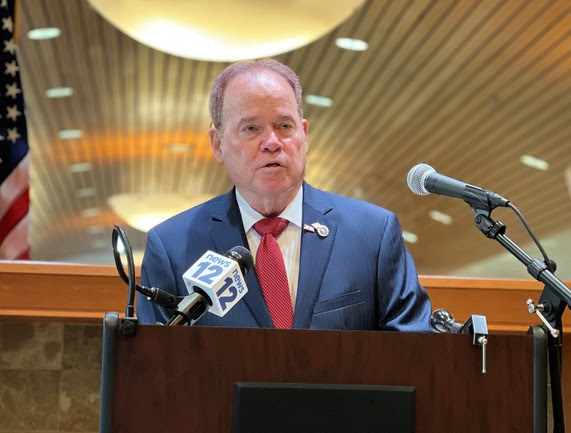
NEW CITY, NY – Rockland County Executive Ed Day unveiled his proposed 2024 $870 million budget at the Robert Yeager Health Complex in New City Monday, which includes a 2% County Property Tax cut.

“On the heels of zero County property tax increases two years in a row, this year I am proposing a 2% reduction in the County property tax,” said County Executive Day. “This 2% reduction is a huge leap from the double-digit tax increases from years past.”

The reprieve is attributed to the County of Rockland recovering from a $138 million deficit in 2014 to a surplus resulting from conservative budgeting, responsible economic growth, and hard work of county employees.

“Our economic turnaround is nothing short of miraculous. I thank our dedicated employees for staying true to our commitment to conservative spending which is enabling us to absorb costs while still providing reprieve for our residents in a responsible and balanced manner,” said County Executive Day.

The 2024 Proposed Budget includes:

  • 2% County Property Tax Cut.
  • Increasing amounts available for patriotic observances from $1250 to $3000.
  • $1 million for additional positions to strengthen our Department of Social Services, seeing increasing demand.
  • Another $1.5 million for college tuition assistance for volunteer fire fighters and emergency responders.
  • An additional 10% in possible funding increases to nonprofit contract agencies and 224 agencies.

County Executive Day concluded the Budget announcement by reiterating his commitment to fiscal responsibility and refusal to put off costs or difficult decisions onto future generations.

“We have come a long way in Rockland, but I promise you this administration will not rest nor stop trying to do everything possible for the people of this county. We will continue the prudent and protective practices that have gotten us this far and work hard to preserve our County for future generations,” concluded County Executive Day.

“The details of an $800 million budget require a detailed review, but based on what the County Executive announced today, it appears to be a good solid footing,” Rockland County Legislature Chairman Jay Hood Jr. said. “The most important goal is that we have the most efficient spending plan while also continuing to provide the services our residents and businesses rely on.”

Rockland County Legislature Budget & Finance Committee Chairman Aron Wieder said a schedule of budget review dates will be released this week.

“Based on what the County Executive expressed today, the proposed budget seems to address many of the evolving needs of county government,” Legislator Wieder said. “I look forward to working in a bipartisan manner with all of my Legislative colleagues, as well as the County Executive and his staff, as a final plan is decided.”

“After attending meetings with the County Executive, his staff, and Legislative leadership, I look forward to supporting his initiatives and working with my colleagues in the legislature on the 2024 budget,” said Lon Hofstein, Minority Leader of the Rockland County Legislature. 

Budget Timeline:

  • By October 1 – County Executive must submit Proposed Budget to County Legislature.
  • By November 20 (tentative) – County Legislature must hold a public hearing on the Proposed Budget.
  • By December 7 (tentative) – County Legislature will vote to adopt the Budget. If the Legislature takes no action by December 7, the budget is deemed adopted. If the Legislature amends the proposed budget; it goes to the County Executive for review; he has five working days after receipt of the amended version to veto. He has line-item veto power.
  • By December 20 – County Legislature must override, or the amended version with any vetoes becomes the budget. It takes a two-thirds vote per veto item to override that veto (Two-thirds is 12 votes).

Government

Rockland County Promotes Native Plants and Water-Smart Landscaping

Published

on

The Water Advisory Council is encouraging residents to embrace water-smart landscaping practices that conserve water and support environmental health.

Officials recommend reducing nonfunctional lawn areas and replacing them with native plants, drought-tolerant landscaping, rain gardens, bioswales, and rain barrels. These practices help reduce water consumption, manage stormwater runoff, improve groundwater recharge, and increase resilience to climate change.

According to the Council, water demand in Rockland County rises from an average of 30 million gallons per day to as much as 45 million gallons per day during the warmer months, placing additional strain on local water supplies.

Residents are encouraged to consider native plants such as Creeping Phlox, Foamflower ‘Elizabeth Oliver,’ and Jacob’s Ladder, which require less watering once established and are well-suited to local conditions.

Examples of successful rain gardens featuring native plants can be found at Orangeburg Library, Bowline Point Park, Kennedy Dells County Park, and Piermont Library.

By replacing sections of lawn with native plants and incorporating features that manage rainwater naturally, residents can play a direct role in protecting Rockland County’s water resources.

The initiative is part of the county’s ongoing effort to promote sustainable landscaping and encourage participation in the national “Less Lawn More Life” movement.

Continue Reading

Government

Rockland Conservation & Service Corps Stream Team Helps Prevent Flooding and Protect Waterways

Published

on

Members of the Rockland Conservation & Service Corps are helping protect local communities through their work with the Rockland County Drainage Agency, inspecting and assessing streams throughout Rockland County.

The Corps’ Stream Team identifies obstructions such as fallen trees, debris, and sediment buildup that can restrict water flow and contribute to flooding during heavy storms. Members also document illicit discharges, erosion issues, and areas in need of sediment remediation.

The information collected helps county officials address potential problems before they become larger environmental or public safety concerns.

In addition to reducing flood risks, the Stream Team’s work supports water quality and helps maintain healthy ecosystems throughout the county. By monitoring local waterways and identifying issues early, the team plays an important role in protecting Rockland County’s natural resources and strengthening community resilience.

Officials say the partnership highlights the importance of proactive environmental stewardship and ongoing efforts to keep Rockland County’s streams healthy, safe, and flowing properly.

Continue Reading

Trending