Connect with us

Entertainment

April is National Gardening Month – Pruning Tips from Down to Earth Living

Published

on

According to the US Department of Agriculture, April is National Gardening Month. Many people await the arrival of spring specifically so they can begin to work in their gardens. One of the first tasks is to see what might need pruning.

Just like gardeners need to get their tools and supplies ready for the spring growing season, so should they take stock of which plants need to be cut back. Pruning in spring is a great opportunity to cut out dead, diseased or dying stems, and to reshape shrubs that have gotten overgrown and unwieldy. A good “haircut” also makes way for new growth and helps to encourage more flowers, foliage, and colorful stems on a wide range of plants.

Plants that flower on the same year’s growth such as lavender, fuchsias, buddleia and ornamental grasses can be pruned almost to ground level before they put energy into new growth. Early-spring bloomers like lilac, forsythia and rhododendron produce flowers on wood formed the previous year and should be pruned immediately after they finish blooming. If you prune them later in the growing season or during winter, you’ll remove flower buds and decrease the amount of spring bloom.

Treat roses that bloom only once per year the same as other spring-blooming shrubs, by pruning after they finish blooming. Repeat bloomers, including hybrid teas, floribundas, and grandifloras, are pruned mostly to shape the plant or to remove winter-damaged canes. If they become overgrown, cut them back in early spring.

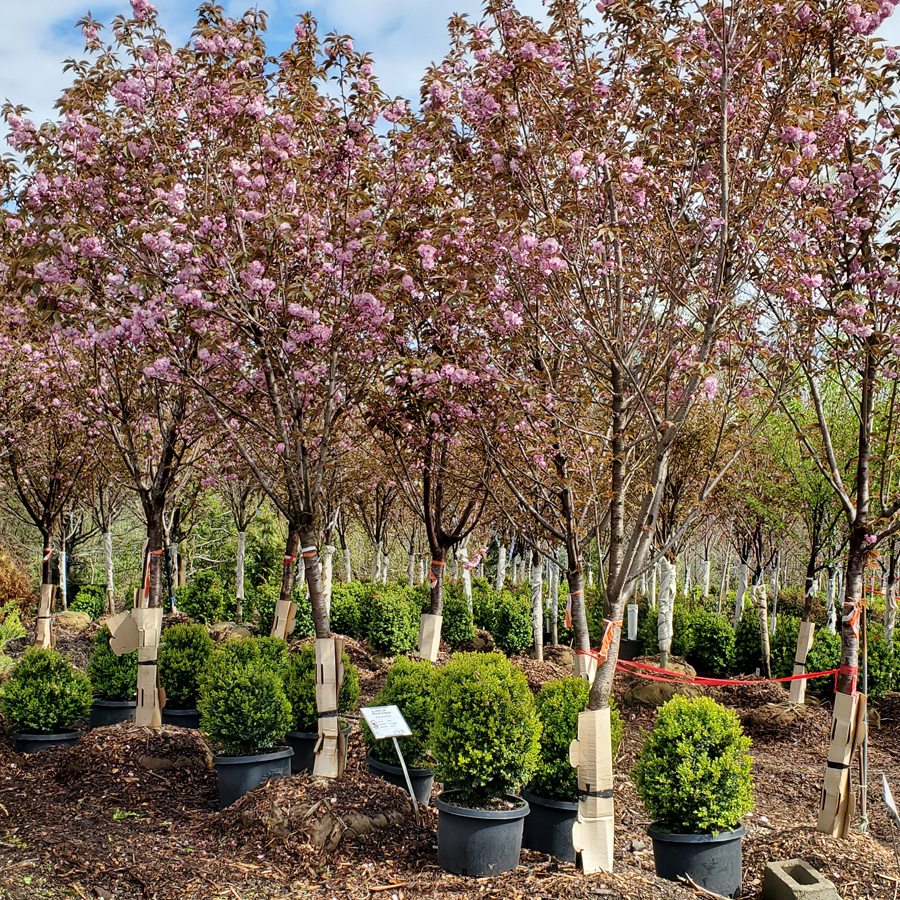
Hedges of beech and cherry laurel as well as boxwood topiaries are best pruned after they have leafed out in early spring. This gives them the form in which they will grow for the season. Since many evergreens only have new growth on the tips of branches, wait to prune them until after new growth for the year is complete. Then it will have the whole growing season to form new buds for growing and filling in next year.

Young fruit trees should be pruned as soon as buds form in order to form them into their desired shape and allow their energy to be devoted to making fruit. Perennial herbs like rosemary, oregano and sage grow leggy and woody over time and benefit from being pruned in spring as growth begins.

Tips on Pruning Correctly

 Use high quality pruning tools that have been cleaned and sharpened since the previous season.
We recommend bypass pruners which work like a scissor rather than an anvil pruner which tend
to squash the branch rather than make a clean cut.
 Remove all dead, diseased, or damaged stems as they attract insects and invite diseases to
develop. Also remove crossing branches, water sprouts and suckers.
 Cut just above a node where the leaves, buds and shoots emerge from the stem. This way you
can manipulate new growth to form in a desired direction, as nodes form on different sides of a
stem.

 It’s important to cut at a downwards angle, so rainwater runs quickly off the wound. Cutting flat
runs the risk of infections entering the plant, creating ideal conditions for fungi to take hold.
 After pruning, mulch plants with a generous layer of garden compost or well-rotted manure, to
give them a boost.

Continue Reading
Advertisement

Entertainment

Two Bald Eagles Spotted Soaring Over Rockland County, Captured in Stunning Photo

Published

on

ROCKLAND COUNTY, NY — A powerful symbol of American wildlife was recently spotted soaring high above Rockland County, as two bald eagles were captured in flight in a striking local photograph.

The image, taken by Rockland County photographer Owey Cramsie Jr., shows the pair of bald eagles gliding through the sky — a sight that has become increasingly common in the Hudson Valley but remains awe-inspiring for residents and wildlife enthusiasts alike.

Once endangered, bald eagles have made a remarkable comeback in New York State, particularly along the Hudson River corridor and surrounding waterways that provide ample food sources and nesting areas. Their presence in Rockland County is widely viewed as a sign of improving environmental conditions and successful conservation efforts.

Local sightings of bald eagles continue to draw attention from birdwatchers and photographers, especially during the winter months when the large raptors are more active and visible in the region.

Photo credit: Owey Cramsie Jr.

Continue Reading

Entertainment

Rockland Report Throwback: Remembering Mike Conklin’s Iconic Snow Sculptures in West Nyack

Published

on

WEST NYACK, NY — As winter weather brings back memories of snowy days past, residents are taking a nostalgic look back at the incredible snow sculptures created over the years by local artist Mike Conklin in West Nyack.

Following major snowstorms, Conklin transformed piles of snow along Green Road into detailed works of art that quickly became local attractions. Among the most memorable creations were a massive snow turtle and an intricately carved dragon, sculptures that stopped passing drivers and drew visitors from across the area.

The temporary artworks showcased both creativity and craftsmanship, turning ordinary winter snowfall into moments of community wonder and conversation. Photos of the sculptures circulated widely, with residents sharing admiration for the time and effort poured into each piece.

Though the sculptures were fleeting — eventually melting away with warmer temperatures — they left a lasting impression on the West Nyack community and remain a fond memory for many Rockland County residents.

Photo credit: Betty Basnight Crowley
Location: Green Road, West Nyack, New York

Continue Reading

Trending