Connect with us

Community

Before Refrigerators, Rockland Lake Supplied Ice to New York City

Published

on

It’s hard to imagine today, but before refrigerators and freezers became common, New York City’s food, restaurants, hospitals, and breweries depended on one unlikely place for ice: Rockland Lake.

During the 19th century, this quiet lake in Rockland County became one of the nation’s largest sources of natural ice, supplying millions of pounds each winter to a rapidly growing New York City. At the height of the industry, Rockland Lake was known as “The Icehouse of New York City.”

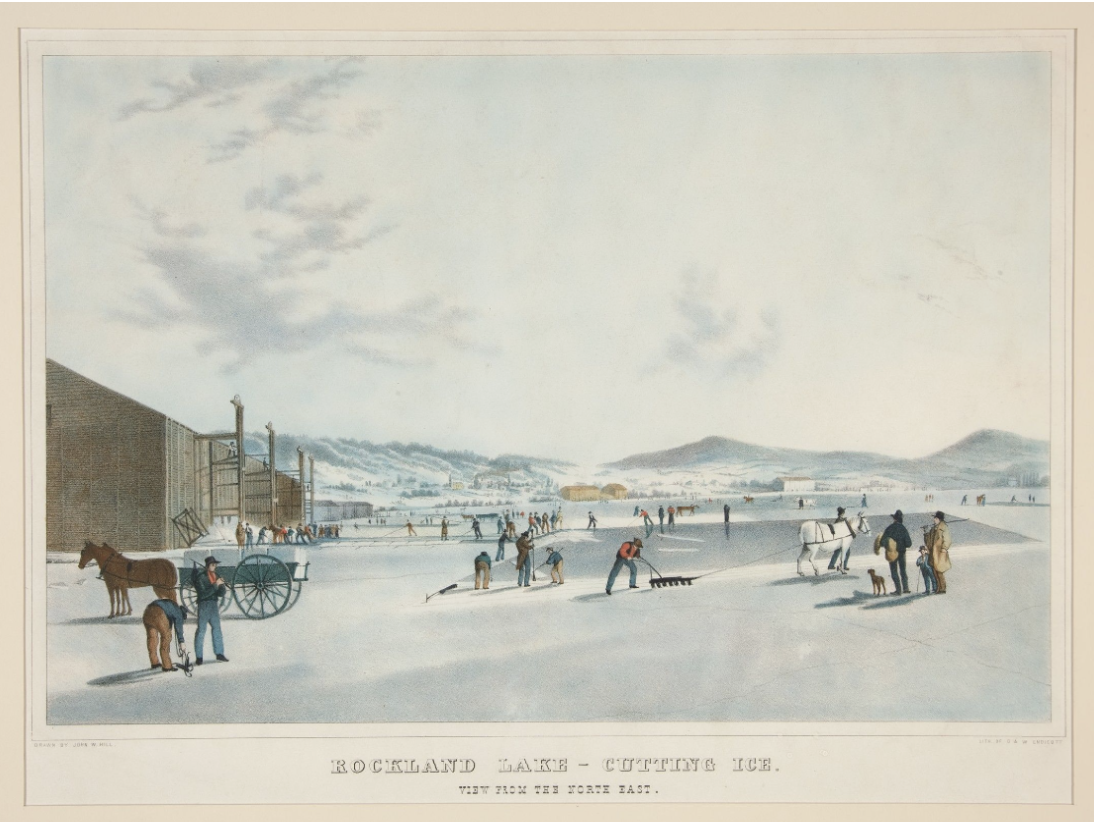
Every winter, once the ice reached about a foot thick, hundreds of workers took to the frozen lake. Using horse-drawn plows, they carved the surface into a giant checkerboard before cutting enormous blocks of ice by hand.

The blocks were floated through narrow channels, lifted onto conveyor systems, and packed into massive icehouses insulated with sawdust. From there, they were loaded onto trains and barges for the trip to New York City, where they were used to preserve food long before mechanical refrigeration existed.

The arrival of the Rockland Lake Railroad in the 1860s helped turn the lake into the center of a booming industry. Ice harvested in Rockland could quickly reach markets throughout the region, making the county an essential part of everyday life in New York City.

The ice business created hundreds of jobs for local residents, from laborers and railroad workers to barge crews and carpenters. During the winter months, the lakeshore buzzed with activity as thousands of tons of ice were harvested and stored for use throughout the year.

But technology eventually changed everything.

By the early 20th century, electric refrigeration began replacing natural ice, and demand for ice harvested from lakes quickly declined. Within a few decades, the once-thriving industry had disappeared, along with the towering icehouses and rail lines that made Rockland Lake famous.

Today, Rockland Lake State Park is known for its scenic trails, fishing, cycling, and outdoor recreation. Families stroll the shoreline, cyclists circle the lake, and anglers cast their lines where workers once harvested enormous blocks of ice destined for New York City.

Few visitors realize they’re standing at the site of an industry that helped feed and preserve one of the world’s largest cities.

While the icehouses are gone and the trains no longer run, Rockland Lake’s role in New York’s history remains one of the county’s most fascinating—and often overlooked—stories.

Photo image from Yale University

Continue Reading
Advertisement
Click to comment

Leave a Reply

Your email address will not be published. Required fields are marked *

Community

Truck Overturns on NYS Thruway Near Tappan Zee Bridge, Causing Delays

Published

on

A traffic incident is causing significant delays on the southbound New York State Thruway near mile marker 16.4, just before the Tappan Zee Bridge.

According to an initial traffic alert, a large truck struck an overpass and overturned across several lanes of the highway. Only the two left lanes are currently getting by.

The incident occurred at approximately 12:15 p.m. and remains ongoing.

Motorists traveling southbound toward Westchester should expect significant delays and consider seeking an alternate route if possible.

Drivers in the area are urged to slow down, use caution and follow directions from emergency personnel.

Photo courtesy: Rockland Fires

Continue Reading

Community

Italy Named World’s Top Olive Oil Producer at 2026 NYIOOC

Published

on

Italy has been named the world’s leading olive oil-producing country at the 2026 NYIOOC World Olive Oil Competition, earning 166 awards, more than any other country represented in the competition.

Producers from 29 countries submitted a total of 1,021 olive oils for blind judging. Judges awarded 464 Gold Awards and 234 Silver Awards across the competition.

Italy’s strong showing comes despite a challenging season for olive growers. Extreme weather conditions and rising production costs have placed additional pressure on producers throughout the country.

From the rolling hills of Tuscany and Umbria to the olive-growing regions of Puglia and Sicily, Italian producers continue to showcase the country’s long-standing tradition of olive oil craftsmanship.

The results highlight the diversity and consistency of Italian extra virgin olive oil, with producers from across the country earning recognition on the international stage.

For many Italian households and food lovers around the world, extra virgin olive oil remains a kitchen staple — used for everything from dipping and dressing to cooking and finishing traditional dishes.

Do you always keep authentic Italian extra virgin olive oil in your kitchen?

Continue Reading

Trending