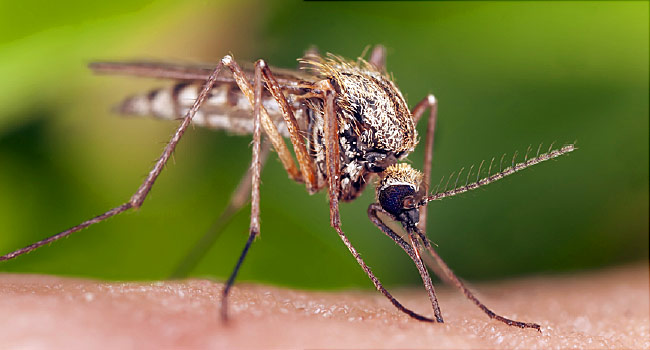
NEW CITY, NY – Rockland County Executive Ed Day and County Health Commissioner Dr. Patricia Schnabel Ruppert announce the first pool (group) of mosquitoes to test positive in Rockland County for Eastern Equine Encephalitis Virus (EEE). This positive test was confirmed by the New York State Department of Health. The infected mosquitoes were collected from a trap in the Town of Orangetown on September 17th as part of the county’s ongoing mosquito surveillance efforts. To date, no human cases of EEE have been reported in Rockland.
“The Rockland County Health Department’s mosquito control program will continue to monitor known mosquito breeding sites, including sites near where these infected mosquitoes were found. Additional mosquito surveillance activities by our Department are already underway,” said Dr. Ruppert.
Eastern Equine Encephalitis is a rare but potentially serious illness for humans that is transmitted by the bite of an infected mosquito. People of all ages are susceptible to infection; however, people over 50 and younger than 15 are at greatest risk of getting the virus. Most people bitten by an infected mosquito will not develop any symptoms. Symptoms such as a sudden onset of headache, high fever, chills, and vomiting can be an indication of encephalitis (swelling of the brain). Anyone experiencing symptoms of encephalitis should seek medical attention right away.
The disease is also a concern for horses, though a vaccine is available and recommended for horses.
There is no commercially available human vaccine for EEE, so the best way to protect yourself is to keep mosquitoes from biting you.
To reduce your risk of being bitten, take the following mosquito prevention tips:
– Cover your body as completely as possible. Wear shoes and socks, long pants and a long-sleeved shirt when outdoors for long periods or when mosquitoes are more active at night, dusk, or dawn.
– Use mosquito repellent, that contains DEET, picaridin, oil of lemon eucalyptus, and follow label instructions.
For more information on to use insect repellent properly, visit the Environmental Protection Agency- insect-repellents at https://www.epa.gov/insect-repellents.
– Cover baby carriers, cribs, and strollers with mosquito netting when outside.
– Close doors and make sure all windows and doors have screens, and that the screens do not have rips, tears or holes.
Mosquitoes lay their eggs in or near water, and their offspring “grow up” in water before they become adults that fly and bite. Many types of mosquitoes, including those that can spread disease, can lay their eggs in tiny amounts of still water such as in birdbaths, bottle caps, unused flowerpots, and discarded tires.
There is a lot you can do to reduce mosquitoes around your home and yard:
– Check your property for ANY items that can hold water. Get rid of the items or empty the water. Scrub the inside of the item at least once a week.
– Drill drain holes in the bottoms of recycling containers, turn over wading pools and wheelbarrows when not in use, and remove all discarded tires.
– If you have a swimming pool or spa that is not in use, drain the water off the cover or treat the standing water with Mosquito Dunks®, and follow instructions. The dunks are available free of charge at the Health Department, Building D, 50 Sanatorium Road in Pomona, Monday – Friday from 9 am to 4 pm, while supplies last.
– Tightly cover water storage containers (buckets, cisterns, rain barrels) so that mosquitoes cannot get inside to lay eggs. For containers without lids, use wire mesh with holes smaller than an adult mosquito.
– Spray mosquitoes with insecticides where they rest; in dark, humid areas like under patio furniture, or under the carport or garage. When using insecticides, always follow label instructions.
– If you have a septic tank, repair cracks or gaps. Cover open vent or plumbing pipes. Use wire mesh with holes smaller than an adult mosquito.
Make sure that roof gutters drain properly, clear vegetation and debris from the edges of ponds, and remove leaf debris from yards and gardens.
To learn more, call the Health Department at 845-364-3173 or visit http://rocklandgov.com/departments/health/environmental-health/mosquito-control/