Connect with us

Police/Fire/EMS

Meet Justanna Bohling, First Female NYSDEC Tactical Operator in DEC History

Published

on

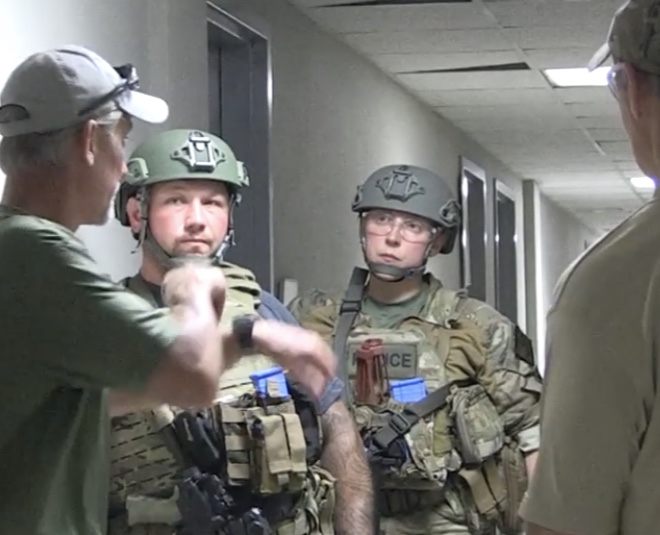
ALBANY, NY – NYSDEC Environmental Conservation Police Officer (ECO) Justanna Bohling graduated from the New York State Division of Criminal Justice Services’ SWAT Operator Course last week, making her the first woman to serve as a tactical operator in DEC history.

Continue Reading
Advertisement

Police/Fire/EMS

Good Samaritan Dies After Trying to Help Crash Victim in West Nyack

Published

on

A 43-year-old Orange County man died early Tuesday after apparently stopping to help the victims of a single-vehicle crash on Palisades Center Drive in West Nyack, according to the Clarkstown Police Department.

Police said officers responded to the crash at approximately 1:20 a.m. on July 28, near Home Depot, after receiving reports of a vehicle that had left the roadway.

When officers arrived, they found a green Toyota Camry that had struck a guardrail, crashed through a fence, and overturned onto its driver’s side.

Both occupants had exited the vehicle before police arrived. A 32-year-old male passenger told officers he had freed himself from the wreck and that the 18-year-old female driver was no longer inside the vehicle. He also reported that a passing motorist had stopped to help but was unsure where the man had gone.

While searching the area, officers heard the driver calling for help from below a retaining wall approximately 30 to 40 feet beneath the roadway in an area of dense vegetation.

Responding officers, assisted by members of the West Nyack Fire Department, accessed the embankment and safely rescued the injured driver. They also located an unresponsive adult male.

The man, identified only as a 43-year-old resident of Maybrook in Orange County, was pronounced dead at the scene.

According to the preliminary investigation, the man was a Good Samaritan who stopped after witnessing the crash. Investigators believe he approached the edge of the retaining wall after hearing the driver calling for help and accidentally fell down the embankment, suffering fatal injuries.

His identity has not been released pending notification of his family.

“The Clarkstown Police Department extends its deepest condolences to his family and loved ones during this difficult time,” the department said in a statement.

The driver and passenger of the Toyota were treated at the scene and transported by Rockland Paramedic Services and Nyack Community Ambulance Corps to local hospitals for evaluation.

Following the preliminary investigation, the 18-year-old driver, who is from Carmel, was arrested and charged with:

  • Driving While Intoxicated (misdemeanor); and
  • Additional New York State Vehicle and Traffic Law violations related to the crash.

She was released on an appearance ticket and is scheduled to appear in Clarkstown Justice Court at a later date.

The Clarkstown Police Department’s Accident Investigation Unit continues to investigate the incident. Anyone who witnessed the crash or has information is asked to contact the Clarkstown Police Department at (845) 639-5800.

A criminal complaint is an accusation. The defendant is presumed innocent unless and until proven guilty in a court of law.

Continue Reading

Police/Fire/EMS

“911, Whats Your Emergency?”

Published

on

In an emergency, dialing 911 is often the first instinct. Whether it’s a house fire, a medical emergency, a serious car crash, or a crime in progress, most people know to call 911—but few know what happens after they hear, “911, what’s your emergency?”

Behind every emergency call is a highly coordinated system of trained dispatchers, advanced technology, and first responders working together to get help where it’s needed as quickly as possible.

The First Few Seconds Matter

When a 911 call is placed in Rockland County, it is answered by a trained emergency communications dispatcher at the county’s Emergency Communications Center.

One of the first questions the dispatcher asks is, “What is the address of your emergency?”

While callers are often eager to explain what happened, confirming the exact location is the dispatcher’s top priority. If the call is disconnected, knowing where to send help can make all the difference.

Dispatchers also ask for the caller’s phone number in case they need to call back if the connection is lost.

Gathering Critical Information

Once the location has been confirmed, the dispatcher begins collecting information about the emergency, including:

  • What happened?
  • Is anyone injured?
  • Is the person conscious and breathing?
  • Is there an immediate danger to others?
  • Are there any hazards responders should know about?

As the conversation continues, the dispatcher is already entering information into a Computer-Aided Dispatch (CAD) system.

Help Is Often Dispatched Before the Call Ends

Many people are surprised to learn that emergency responders are frequently dispatched while the caller is still speaking with the dispatcher.

As new information is entered into the CAD system, the appropriate agencies are immediately notified. Depending on the nature of the emergency, that may include local police, volunteer firefighters, ambulance personnel, advanced life support units, or multiple agencies responding together.

This allows responders to begin heading toward the emergency while dispatchers continue gathering important details.

How Volunteer Firefighters Are Notified

Unlike career fire departments staffed around the clock, many Rockland County fire departments rely on volunteers.

When a fire or rescue call is dispatched, volunteers are alerted through county radio systems, digital pagers, station alerting systems, and mobile notification apps. Volunteers often leave work, family dinners, or sleep to respond, heading first to their fire station before responding to the emergency.

Their commitment allows departments throughout Rockland County to provide emergency services around the clock.

More Than Just Answering Phones

Emergency dispatchers do much more than relay information.

They are trained to remain calm during some of the most stressful moments in a person’s life while providing clear instructions until help arrives.

Depending on the situation, dispatchers may guide callers through CPR, help control severe bleeding, provide instructions for choking emergencies, assist during childbirth, or advise callers how to stay safe until first responders arrive.

Every second counts, and dispatchers are often the first first responders.

Why They Keep Asking Questions

It can be frustrating for callers to answer multiple questions when help is urgently needed.

However, those questions serve an important purpose.

While responders are already on their way, dispatchers continue collecting information that can help firefighters, police officers, EMTs, and paramedics prepare before they arrive.

Knowing whether someone is trapped, whether weapons are involved, or whether hazardous materials are present can improve both responder safety and patient care.

Calling From a Cell Phone

Today’s smartphones can provide dispatchers with valuable location information through Enhanced 911 technology.

Even so, callers should always provide the exact address or nearest intersection whenever possible. GPS information can sometimes be delayed or less accurate, especially inside buildings or in remote areas.

Knowing your location remains one of the most important pieces of information you can provide.

When You Can’t Speak

Rockland County also supports Text-to-911 for situations where speaking is dangerous or impossible, such as certain domestic violence incidents or for individuals who are deaf or hard of hearing.

Whenever it is safe to do so, however, calling remains the fastest and most effective way to communicate with emergency dispatchers.

How You Can Help During an Emergency

Dispatchers encourage callers to:

  • Stay as calm as possible.
  • Know your exact location.
  • Answer every question, even if help appears to be taking time.
  • Follow any instructions provided.
  • Do not hang up until the dispatcher tells you to do so.

A Team Effort

From the moment a 911 call is answered until first responders arrive on scene, dozens of moving parts work together behind the scenes.

Emergency dispatchers, police officers, volunteer firefighters, EMTs, paramedics, and other public safety professionals each play a critical role in protecting the community.

The next time you dial 911, remember that while you may only hear one calm voice on the phone, an entire emergency response system is already working to bring help to your door.

Continue Reading

Trending