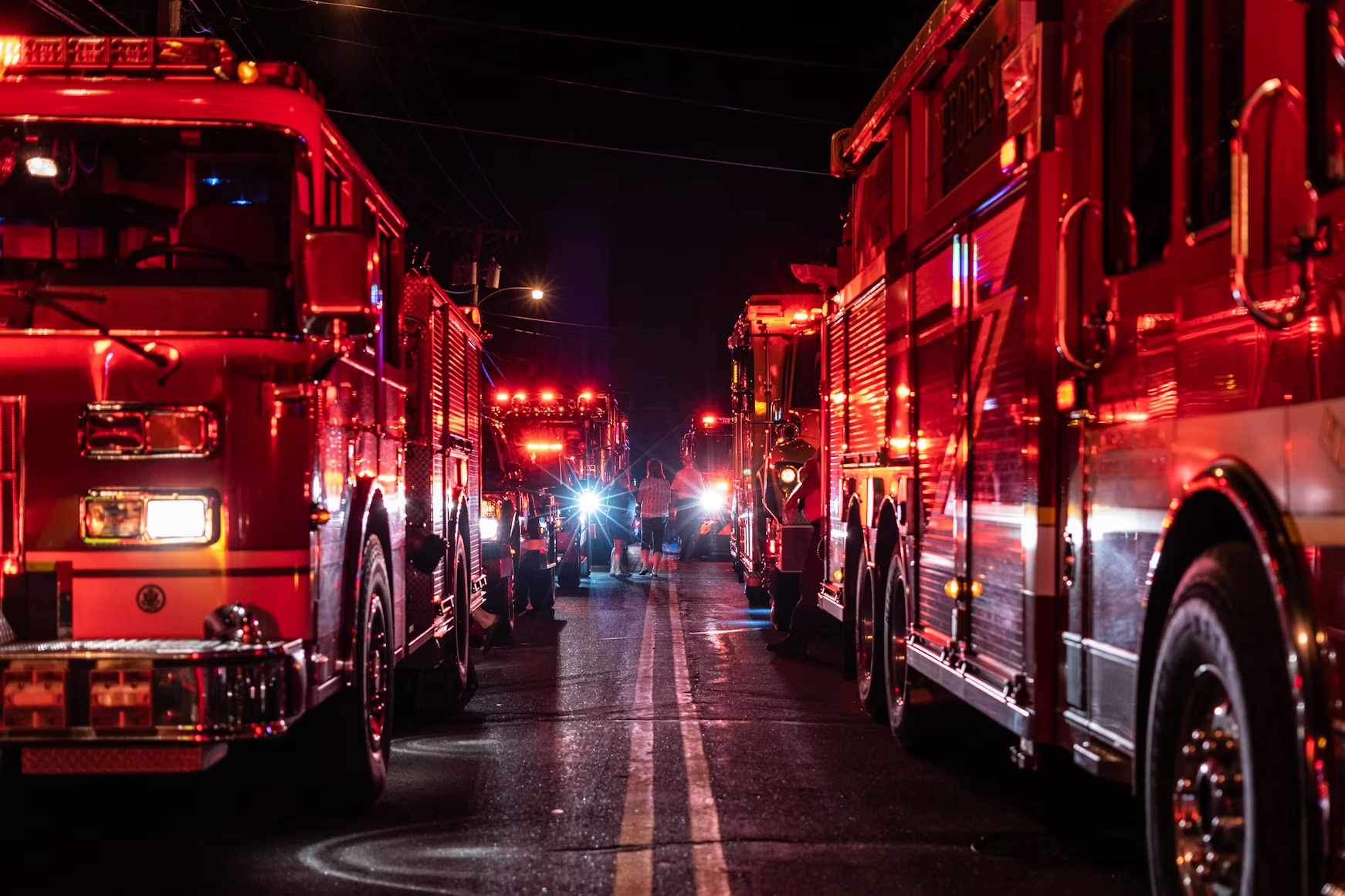
When a fire alarm sounds in Rockland County, every second matters.
Behind the flashing lights and sirens are members of local fire departments—neighbors, friends, co-workers and community members who have chosen to volunteer their time to help protect the people and places around them.
For residents looking for a meaningful way to give back to their community, becoming a volunteer firefighter can offer something few other volunteer opportunities can: the chance to make a direct difference when someone needs help most.
You Don’t Have to Be a Professional Firefighter to Start
One of the biggest misconceptions about volunteering is that applicants need to arrive with firefighting experience. Volunteer fire departments provide training to members, allowing newcomers to learn the skills necessary to serve safely and effectively.
Depending on the department and role, training can include fire suppression, emergency response, first aid, rescue operations, equipment use and other specialized skills.
Volunteers can also find roles beyond fighting fires. Fire departments rely on members for emergency medical response, communications, fundraising, community education, equipment support, administrative work and other important responsibilities.
Make a Difference Close to Home
Volunteer firefighters aren’t strangers coming into the community—they are part of it.
They respond when neighbors need assistance, help educate families about fire prevention and participate in community events throughout the year.
For many volunteers, that sense of purpose is one of the most rewarding parts of the experience.
Whether responding to a house fire, helping at a motor vehicle accident or assisting during another emergency, volunteers know that their time and training can have a direct impact on someone’s life.
Build Skills That Last a Lifetime
Volunteering can also provide valuable personal and professional development.
Members learn how to work as part of a team, communicate under pressure, solve problems and make decisions in challenging situations. Training can introduce volunteers to emergency response, leadership and technical skills that can be useful both inside and outside the firehouse.
Young adults can also gain experience working with others and serving their community while developing a stronger understanding of responsibility and leadership.
Find Your Place in the Firehouse
Not everyone joins for the same reason, and not everyone serves in exactly the same way.
Some volunteers are drawn to emergency response. Others enjoy working with equipment, organizing community events, teaching fire safety or supporting their department behind the scenes.
That means there may be a place for people with a wide range of interests, abilities and schedules.
Prospective members can contact their local fire department to learn about eligibility requirements, training, time commitments and available opportunities.
It’s About More Than Fighting Fires
Volunteer fire departments are part of the fabric of communities across Rockland County. They provide emergency services while also bringing residents together through fundraisers, fire prevention programs, community events and public education.
Joining a department can be a way to meet people, develop lifelong friendships and become more connected to the community.
And perhaps most importantly, it is an opportunity to be there for someone on what could be the worst day of their life.
Rockland County Needs You
Every community needs people willing to step forward.
You don’t need to be a firefighter today to become one. You simply need the willingness to learn, train and serve.
If you’ve ever wondered what it would be like to volunteer, contact your local fire department and ask about membership. Find out what training is required, what roles are available and how you can get involved.
For someone looking for a way to turn their time into something meaningful, volunteering with a local fire department could be the call worth answering.
Your neighbors may never know your name when you arrive—but they’ll remember that someone came when they needed help.