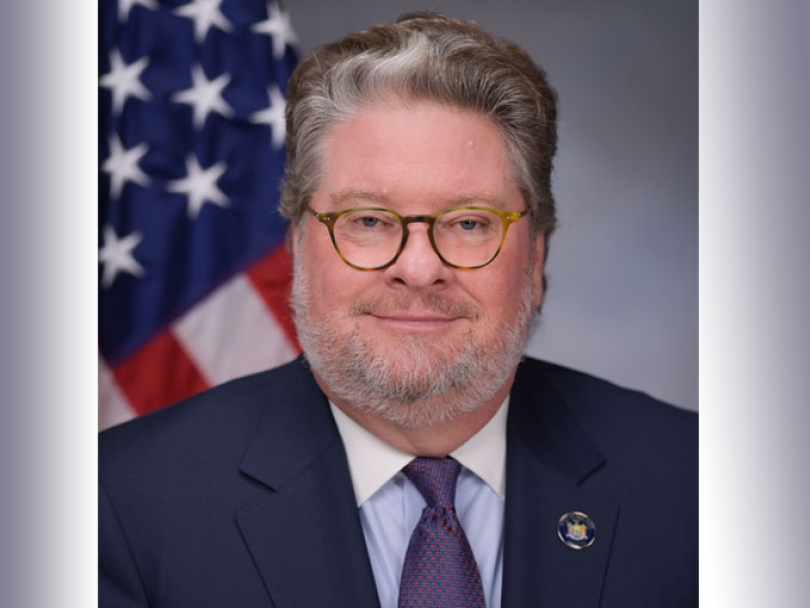
STONY POINT, NY – On the third anniversary of the passing of Matthew Horan, a Westchester resident with Substance Use Disorder who died of a fentanyl overdose, New York State Senator Pete Harckham and Assemblymember John T. McDonald III announced today that their bill known as “Matthew’s Law,” which allows pharmacists to dispense testing kits to detect drug adulterants like fentanyl, has been signed into law by Governor Kathy Hochul.
“To stop as many overdoses as we can before they occur, it is critical that we make sure testing kits for fentanyl and other adulterants are widely available,” said Harckham, a member of the Senate Committee on Alcoholism and Substance Abuse who served as its chair from 2018 through 2022. “Thanks to Governor Hochul for signing this bill into law, these lifesaving tools will be stocked now in every pharmacy in New York, for starters. I am grateful to Kailey Horan, whose brother Matthew is one of the many individuals we have lost to fentanyl and the namesake of this new law, for spurring me to introduce it.”
Added Harckham, “Not everyone is ready for Substance Use Disorder treatment at the same time. We have a moral obligation to help people stay alive until such time they may be ready to access help. It’s important to get the word out that fentanyl test kits should be used because they save lives.”
“The increase in drug overdose deaths is a public health crisis that requires immediate action and novel strategies,” said McDonald, a registered pharmacist. “This legislation can help save lives by providing tools to identify the growing presence of alterants like fentanyl in the illicit drug supply. The opioid and overdose crisis continues to evolve in dangerous and unpredictable ways, and we must do everything we can to provide our communities with tools to prevent as many of these deaths as we can. I thank Governor Hochul for her commitment to helping New Yorkers in this public health crisis.”
Over 109,000 people died from a drug overdose in 2022, according to a new Centers for Disease Control and Prevention report released in May 2023; and fentanyl, a powerful synthetic opioid, was the cause of 68.8% of all U.S. opioid overdose deaths—over 75,000 people. The bill (S.2009C / A.5200B), a version of which was introduced last year, is called “Matthew’s Law” in honor and memory of Matthew Horan, after his sister, Kailey Horan, had requested Harckham find a way to make fentanyl testing kits more commonplace and easier to procure after her brother ingested the drug unknowingly.
Prior to the enacting of “Matthew’s Law,” fentanyl testing strips, which can detect the presence of fentanyl in different narcotics (such as cocaine, heroin, methamphetamine and marijuana) and in various drug forms (pills, powders, injectables), have been inaccessible in most communities statewide. Until recently, the testing strips were distributed almost exclusively by Substance Use Disorder treatment providers and harm reduction organizations at locations that are few and often far between.
Opioid overdose deaths attributable to fentanyl have increased sharply in recent years, as opioid prescriptions decreased because of concerns of abuse and drug reformulations to counter rampant abuse led to users seeking street sales of illicit painkillers, which are often spiked with fentanyl. As little as two milligrams of fentanyl can be a lethal dose.
Matthew’s Law allows healthcare professionals who are licensed, registered and authorized to prescribe prescription drugs to dispense fentanyl testing kits to any person. The kits can be stored at a licensed pharmacy, hospital, clinic or other health care facility, as well as at retail stores that contain a pharmacy department. Transactions will be limited to five testing kits at a time.
Matthew’s Law passed the New York State Senate unanimously and goes into effect 30 days after its signing on November 17, 2023.
Rules and regulations regarding the dispensing of adulterant test kits in New York will be set by the state’s DOH commissioner. Harckham and McDonald’s bill models the August 2022 standing order from the DOH commissioner to make naloxone, an opioid overdose reversal medication, available at pharmacies statewide.
Harckham and McDonald’s legislation, signed by the Governor, providing for the distribution of testing kits at pharmacies, will significantly increase ready access to testing kits in communities across the state. By making drug testing more accessible, Matthew’ Law will reduce accidental overdoses and save lives.
Kailey Horan said, “We want to express our deepest gratitude to Governor Hochul for enacting Matthew’s Law. Her commitment to addressing the critical issues surrounding substance use disorder is commendable, and we are grateful for her leadership in creating positive change for New Yorkers.”
Horan added, “We would also like to extend a heartfelt thank you to Senator Harckham for his instrumental role in the passage of Matthew’s Law. Working with Senator Harckham has been a privilege, and we knew that his dedication and expertise were crucial for the success of this legislation. We believed that he was the only Senator capable of passing this bill with almost unanimous support, and he did. He will always have a special place in our hearts, and we’re so appreciative to have had the opportunity to collaborate with him.
“Special appreciation is also owed to Sylvie Sherlach, Legislative and Committee Director for Senator Harckham; her relentless dedication played a pivotal role in championing Matthew’s Law. Sylvie’s unwavering commitment to the cause and her efforts to keep our family informed throughout the legislative process have not gone unnoticed. Her invaluable contribution has brought about this significant change for New Yorkers. Sylvie is a force; we are eternally indebted to her for her remarkable efforts.
“Once again, thank you, Governor Hochul, Senator Harckham, Sylvie Sherlach, Assemblyman John McDonald III, and the Harckham team for your collective efforts to bring about positive change and ensure that Matthew’s Law becomes a reality.”