Connect with us

Government

Staying Safe During Winter Hikes Days Are Cold And Short

Published

on

Winter days are short and cold, and winter nights are long and even colder. With the sun setting just after 4:00 p.m. this time of year, it’s very important to plan your hike accordingly, so you’re not racing the sun to get to shelter.

Here are some tips to prevent getting lost in the woods and stuck in the dark:

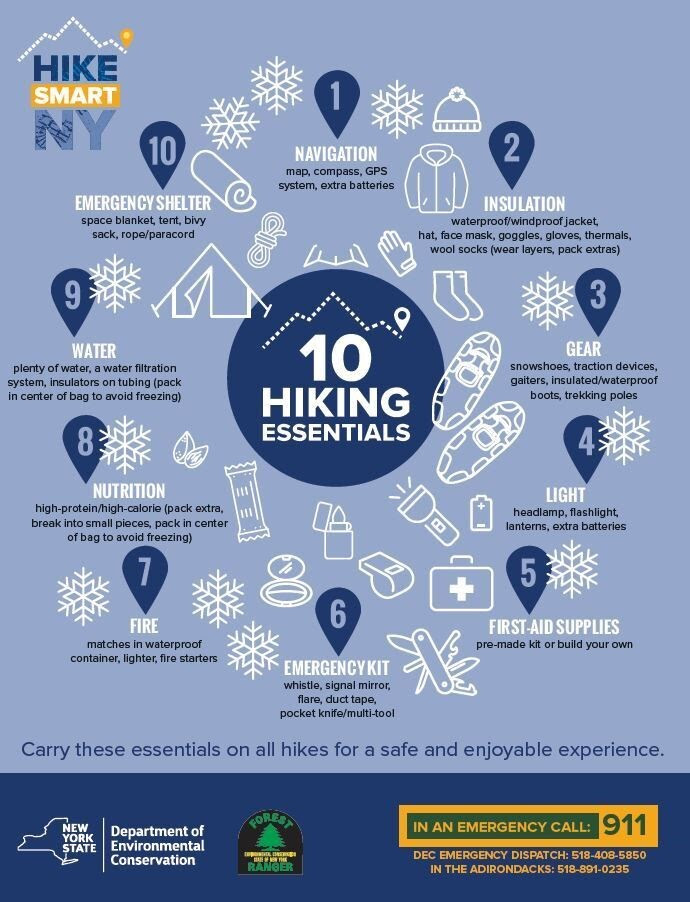
  • Rather than using your cell phone flashlight, always bring a headlamp or flashlight (preferably two, with extra batteries).
  • Learn to use a topographic map, GPS, and compass, and carry them with you. Many people get lost because they don’t trust the readings on their compass. GPS units have become very affordable and can be extremely useful; however, they only aid in navigation and must be used with a compass and map. Knowing your GPS coordinates may be of little help if you cannot figure out which way and how far you need to walk to reach safety.
  • Pick out landmarks that are easy to find at the end of the day. For example, if you hunt or hike south of a road that runs east-west, then you know that by walking north, you will eventually come to the road. Keep these kinds of landmarks in mind before and during your trip, especially when light is dwindling toward the end of the day.

For more info on how to avoid getting stranded or what to do if you are, visit DEC’s Lost In The Woods webpage.

DEC’s Hike Smart NY can also help you prepare with a list of 10 essentials, guidance on what to wear, and tips for planning your next hiking trip with safety and sustainability in mind.

Continue Reading
Advertisement

Government

Rockland County Promotes Native Plants and Water-Smart Landscaping

Published

on

The Water Advisory Council is encouraging residents to embrace water-smart landscaping practices that conserve water and support environmental health.

Officials recommend reducing nonfunctional lawn areas and replacing them with native plants, drought-tolerant landscaping, rain gardens, bioswales, and rain barrels. These practices help reduce water consumption, manage stormwater runoff, improve groundwater recharge, and increase resilience to climate change.

According to the Council, water demand in Rockland County rises from an average of 30 million gallons per day to as much as 45 million gallons per day during the warmer months, placing additional strain on local water supplies.

Residents are encouraged to consider native plants such as Creeping Phlox, Foamflower ‘Elizabeth Oliver,’ and Jacob’s Ladder, which require less watering once established and are well-suited to local conditions.

Examples of successful rain gardens featuring native plants can be found at Orangeburg Library, Bowline Point Park, Kennedy Dells County Park, and Piermont Library.

By replacing sections of lawn with native plants and incorporating features that manage rainwater naturally, residents can play a direct role in protecting Rockland County’s water resources.

The initiative is part of the county’s ongoing effort to promote sustainable landscaping and encourage participation in the national “Less Lawn More Life” movement.

Continue Reading

Government

Rockland Conservation & Service Corps Stream Team Helps Prevent Flooding and Protect Waterways

Published

on

Members of the Rockland Conservation & Service Corps are helping protect local communities through their work with the Rockland County Drainage Agency, inspecting and assessing streams throughout Rockland County.

The Corps’ Stream Team identifies obstructions such as fallen trees, debris, and sediment buildup that can restrict water flow and contribute to flooding during heavy storms. Members also document illicit discharges, erosion issues, and areas in need of sediment remediation.

The information collected helps county officials address potential problems before they become larger environmental or public safety concerns.

In addition to reducing flood risks, the Stream Team’s work supports water quality and helps maintain healthy ecosystems throughout the county. By monitoring local waterways and identifying issues early, the team plays an important role in protecting Rockland County’s natural resources and strengthening community resilience.

Officials say the partnership highlights the importance of proactive environmental stewardship and ongoing efforts to keep Rockland County’s streams healthy, safe, and flowing properly.

Continue Reading

Trending