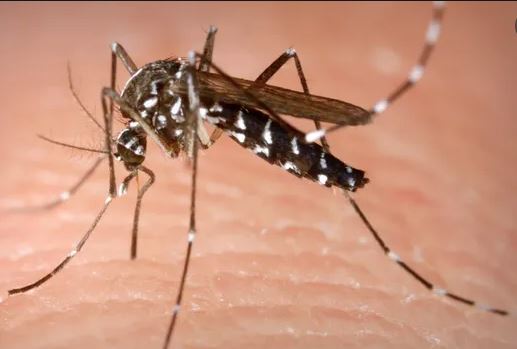
Rockland County Department of Health announces the first pool, or group, of mosquitoes tested positive for West Nile Virus (WNV) this year. It was confirmed by the New York State Department of Health. The infected mosquitoes (Culex pipiens-restuans) were collected from a trap in the Town of Orangetown during the week of June 10th and submitted for testing on June 17th as part of the County’s ongoing mosquito surveillance efforts. So far this year, 33 pools have been submitted for testing. No human cases have been reported this season, and the last reported human case in Rockland was in 2023.
“This time of year is when we see a rise in West Nile Virus activity, and this positive mosquito pool confirms that. The Health Department mosquito control team visits all known mosquito breeding sites and applies larvicides throughout the summer to control the mosquito population, reducing the risk of mosquito-borne diseases,” said Amy Isenberg, Environmental Health Specialist, Mosquito Program Coordinator.
Most mosquitoes do not test positive for disease-causing viruses. However, a bite from a West Nile Virus-infected mosquito can cause severe illness and, in some cases, death. Although a person’s chances of getting sick are small, those aged 50 and older are at the highest risk for serious illness. Not everyone infected with West Nile Virus will become ill. However, West Nile can cause serious complications, including neurological diseases, and can also cause a milder flu-like illness, including fever, headache, body aches, nausea, and occasionally a skin rash and swollen lymph glands. If you think you have symptoms of West Nile Virus, see your doctor right away.
Mosquitoes lay their eggs in standing water. The eggs hatch into larvae that develop in the water for 7 to 10 days before emerging as adult mosquitoes that fly and bite. Many types of mosquitoes, including those that can spread disease, lay their eggs in items around the home, such as in birdbaths, unused flowerpots, discarded tires, and even bottle caps, as well as in small ponds or other bodies of stagnant water.
The best and most effective mosquito control begins in private yards. Eliminating standing water is the first step in reducing mosquito breeding:
• Check your property for ANY items that can hold water. Anything you choose to keep outside, such as kids’ toys, buckets, wading pools, canoes, and wheelbarrows, should be flipped over when not used to prevent them from collecting any water.
• Drill holes in the bottoms of recycling containers and remove all discarded tires.
• If you have a swimming pool or spa that is not in use, drain the water off the cover or treat the standing water with Mosquito Dunks® and post accordingly. The dunks are available free of charge at the Health Department, Building D, 50 Sanatorium Road in Pomona, Monday – Friday by appointment only, while supplies last. Call 845-364-3173 or e-mail wnv@co.rockland.ny.us to arrange a pickup.
• Tightly cover water storage containers (buckets, cisterns, rain barrels) so mosquitoes cannot get inside to lay eggs. For containers without lids, use wire mesh with holes smaller than an adult mosquito.
• If you have a septic tank, repair cracks or gaps. Cover open vents or plumbing pipes. Use wire mesh with holes smaller than those of an adult mosquito.
• Make sure that roof gutters drain properly, clear vegetation and debris from the edges of ponds, and remove leaf debris from yards and gardens.
To reduce your risk of being bitten, take the following steps:
• Cover up as completely as possible. When outdoors for long periods or when mosquitoes are more active, wear shoes and socks, long pants, and a long-sleeved shirt.
• Use mosquito repellent, which should always be applied according to label directions. Do not use repellent on babies younger than 2 months old. Do not use products containing oil of lemon eucalyptus (OLE) or para-menthane-diol (PMD) on children younger than 3 years old.
• Cover baby carriers with mosquito netting when outside.
• Stay indoors when mosquitoes are more active.
• Close doors and ensure that all windows and doors have screens and that the screens do not have rips, tears, or holes.
Call the Rockland County Health Department at 845-364-3173 to learn more or visit the Mosquito Control webpage. For more information, visit the New York State Health Department West Nile Virus webpage.