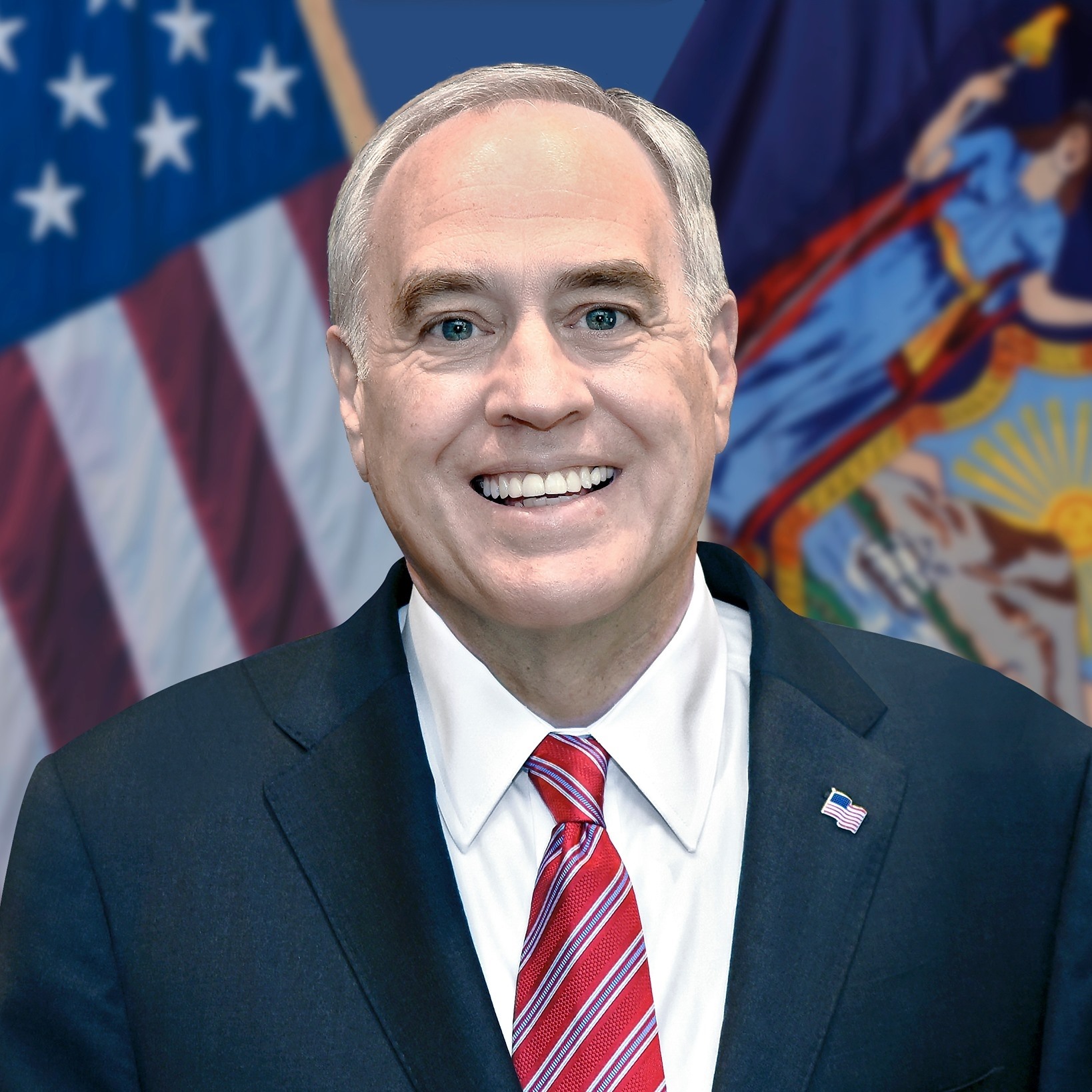
ROCKLAND COUNTY, NY – The Nourish New York program (Nourish NY) was created to help the 1-in-10 New Yorkers facing food insecurity and local farmers by connecting food banks to New York-grown products. However, an audit released today by New York State Comptroller Thomas P. DiNapoli found the agencies jointly managing Nourish NY may have limited the program’s ability to fund certain food bank purchases, and thus benefit fewer area farmers.
“The Nourish New York Program is vital and addresses significant needs in both rural and urban communities to combat food insecurity,” DiNapoli said. “The state’s Department of Health and Department of Agriculture and Markets need to provide stronger oversight to help the program reach its full potential. Greater and clearer guidance to food relief organizations will enable them to get the funds needed to buy New York-made farm products and should help increase the number of participating farms.”
Nourish NY is jointly managed by the New York State Department of Health (DOH) and the New York State Department of Agriculture and Markets (Ag & Mkts). The program launched in May 2020 to help with the pandemic’s food supply chain disruptions. It was then permanently signed into state law in November 2021 and has been allocated $147 million in funding through March 2023.
Regional food banks contract with DOH to receive these funds and allocate them to local soup kitchens, food pantries, food banks and other community-based organizations to purchase New York grown farm products. DOH reviews and approves all claims for payments, relying on verification from Ag & Mkts that purchases made with Nourish NY funds meet program requirements.
DiNapoli’s audit revealed DOH approved $22.7 million in purchases from May 2020 through March 2022, despite not having adequate documentation to support the food products were grown in New York as required under Nourish NY. Auditors noted this often occurred because local food providers only submitted lump sum expenses to the regional food banks, as opposed to a breakdown of products purchased, which was not required of them by DOH.
Ag&Mkts could not always verify the source of the farm products purchased despite this being their responsibility. In a review of 165 food purchases, totaling almost $1 million from distributors, neither the agency nor the food relief organization could provide the required documentation.
DOH also provided little guidance to food relief organizations on what administrative costs NY Nourish funding could cover. As a result, the audit found DOH approved over $8.9 million in administrative reimbursement that could not be verified due to insufficient documentation. Auditors concluded DOH needs to improve its oversight, otherwise, funds could be improperly used for expenses not associated with Nourish NY.
Auditors also found that DOH applied Hunger Prevention and Nutrition Assistance Program standards to Nourish NY. Applying these more rigorous nutritional standards left food relief organizations unable to purchase certain foods commonly produced in New York, such as honey, maple syrup, and whole milk. DOH’s decision to combine funds for both food assistance programs and not supply adequate guidance of these standards to food relief organizations led to some area farms unable to participate in the program. Further, the audit points out that under the law, Nourish NY does not restrict purchases based on whether products meet certain nutritional standards.
The audit determined vendor participation could be increased in the Nourish NY Program. North County had the fewest participants in the program of any region statewide with 16. Vendor participation was also low in the Southern Tier (28), Mohawk Valley (29), New York City (33), Central New York (36), Western New York (39) and Long Island (39), while the Capital Region had the most participants with 102 followed by Mid-Hudson with 97 and the Finger Lakes with 78 vendors. Ag & Markets officials identified measures taken and planned to encourage farmer participation in the program.
“We created Nourish NY as a pandemic lifeline to combat the unprecedented rise in food insecurity while providing crucial support to our struggling farmers,” said State Senator Michelle Hinchey, Chair of the Senate Agriculture Committee. “Anything that obstructs this now essential state program demands immediate resolution. I thank State Comptroller DiNapoli for conducting this audit, which will realign Nourish NY back to serving everyone it is meant to help—effectively bridging the gap between food bank demand and locally grown food from our farmers.”
“Over the last several months, my colleagues in the legislature and I have been working hard to find solutions to the problems that at least one of these agencies seems to be experiencing with the timely disbursement of the Nourish monies,” said State Assemblymember Catalina Cruz. “The results of the audit conducted by State Comptroller DiNapoli highlights a symptom of the larger systemic issues with the implementation of Nourish, which is creating grave concern amongst farmers, distributors, and food banks. Any disruption of services will absolutely result in our neediest and most vulnerable community members again facing serious food insecurity issues. I sponsored Nourish New York to not only support our statewide local farms but to combat hunger in the neighborhoods needing assistance, and the failure to provide an immediate and full resolution of the issues outlined in the State Comptroller’s report, as well as other problems plaguing the management and administration of monies, guts the entire purpose of the legislation. I want to thank the State Comptroller for his thoughtful and swift response and look forward to an adequate and comprehensive solution from the Executive.”
“I am grateful to State Comptroller DiNapoli for this thorough and critically needed audit of the implementation of Nourish NY,” said State Senator George Borrello. “As a member of the bipartisan coalition that worked to establish Nourish as a permanent program, we all have great dedication to this initiative and its mission and want to see it succeed. The path towards that goal starts with adopting the recommendations of this audit. I am particularly gratified that the report concurs with me and my colleagues that the decision to merge the funding for Nourish NY and HPNAP led to challenges and needs to be overhauled. Addressing that issue as well as the others outlined in the report represent the blueprint for the program’s growth and impact for years to come.”
“Nourish NY provides aid to hundreds of New Yorkers across the state grappling with food insecurity,” said State Senator Monica Martinez. “It is critical this program aligns with its original intent and remains a sustainable and accessible option for food relief organizations. Eligibility requirements should be clearly communicated to avoid a reduction in participation and ensure nutritional food assistance needs are being met.”
“As conceived, Nourish NY’s purpose is both noble and necessary: to combat food insecurity while supporting our local farmers,” said State Senator Rachel May. “The State Comptroller’s report offers useful recommendations to improve this new and evolving program, and I believe that both departments will work together to enhance the documentation process, boost vendor participation, and properly serve the residents and farmers across our state.
“We applaud Comptroller DiNapoli for his dedication to improving New York State’s efforts to combat hunger,” said State Assemblymember Michaelle C. Solages, Chair of the NYS Black, Puerto Rican, Hispanic, and Asian Legislative Caucus. “The Nourish NY program, championed by leaders like Assemblymember Cruz and other members of the Caucus, plays a pivotal role in providing critical food services to underserved communities. It is great to see both the Department of Health and Ag & Markets responding positively to State Comptroller DiNapoli’s audit, and we anticipate collaborating with all stakeholders to further enhance this vital program.”
“The Nourish New York program was designed to help bolster the efforts of local food banks and food pantries by building partnerships with local farms, furthering the ability for food insecure New Yorkers to receive assistance,” said State Assemblymember Linda B. Rosenthal, Chair of the Assembly Committee on Housing. “Especially here in New York City, the need for food relief has only grown since the start of the pandemic and with the rising cost of groceries, families are struggling to get by. It is my hope that the recommendations outlined in State Comptroller DiNapoli’s audit will be quickly implemented so that communities around the state can benefit from the strong collaboration between farmers and hunger prevention organizations that the program envisioned.”
“It is disappointing to hear that Nourish NY has lacked the crucial support and oversight it needs,” said State Assemblymember Kimberly Jean-Pierre. “This program was designed to help New York’s farmers, combat food insecurity, and strengthen our communities. It is clear the lack of oversight has hindered this program from reaching its highest potential. Food banks are critical to my constituents and utilized by community members from all walks of life, including veterans, senior citizens and families facing food insecurity. Recommendations such as improved guidance, stricter oversight, and increased data analysis will help ensure the program’s effectiveness. I applaud the State Comptroller for looking into this issue and look forward to his recommendations being implemented. Our farmers and communities deserve no less.”
“The Nourish New York program is vital in helping support struggling New York families as well as local farmers statewide,” said State Assemblymember Keith P. Brown. “Without it, families reliant on food banks and pantries would not have access to nutritious, locally grown foods provided by area farmers. I fully support the efforts of State Comptroller DiNapoli to seek to expand Nourish NY, so food banks have the funding required to purchase healthy farm-to-table foods for New Yorkers battling food insecurity.”
“As a strong advocate of Nourish New York, it is evident that the findings of State Comptroller DiNapoli’s audit highlight the need for improved communication, documentation, and criteria to ensure the program’s success in our communities,” said State Assemblymember Fred W. Thiele Jr. “This program is not only essential for supporting our local farmers but also for providing nutritious food to those in need across our communities.”
To help improve the program DiNapoli’s audit recommends:
DOH and Ag&Mkts work together to establish criteria for Nourish NY purchases that most effectively balances the needs of its various stakeholders and improve communication of that guidance to food relief organizations and vendors.
DOH and Ag&Mkts improve oversight of Nourish NY, including reviewing processes to enhance documentation requirements and ensure purchases are from eligible sources.
DOH communicate guidance to food relief organizations on eligibility requirements for purchases made under the Nourish NY program.
Ag&Mkts improve vendor participation data collection and reliability, and use this to build the program’s effectiveness and increase participation by farms, producers or processors in the program.
In response, DOH and Ag&Mkts generally agreed with the audit’s recommendations and are looking to improve NY Nourish and their collaboration to further support the program’s mission of helping more food banks and farmers. To date, the program has helped food relief organizations purchase more than 94 million pounds of New York products and supported 4,333 farms and agricultural businesses across the state. The agencies’ responses are included in the audit.